Author: dhfuik

  • Taraji P. Henson Makes a Flawless Case for Matching Your Manicure to Your Jewelry — See Photos

    Taraji P. Henson Makes a Flawless Case for Matching Your Manicure to Your Jewelry — See Photos

    Taraji P. HensonPhoto: Getty ImagesSave StorySave this storySave StorySave this story

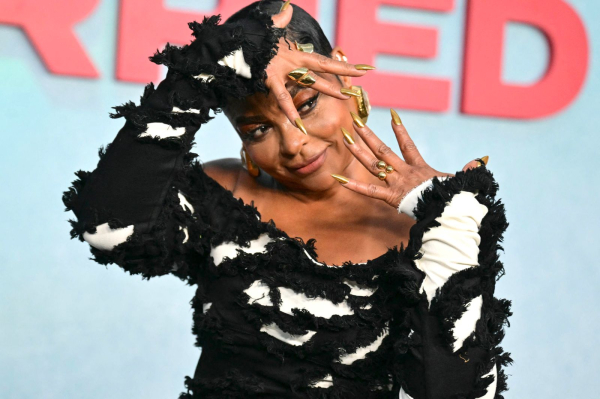
    There is something so classic about a gold manicure. Not gold chrome, not a golden cat-eye polish that you have to tilt your hand toward a window to truly appreciate. Just gold. Taraji P. Henson gets it. Even without any nail-art bells and whistles, she delivered a particular brand of maximalism at the premiere of Why Did I Get Married Again?, where her nails could be seen gleaming from clear across the red carpet.

    A rich, almost antique yellow-gold, Henson’s polish is opaque and metallic, glistening without any help from glitter. The shade perfectly ties in the earrings and rings she wore, making her nails seem more like another piece of jewelry than a standard manicure.

    Taraji P. Henson showing off gold nailsPhoto: Getty Images

    Henson has been known to do her own nails with serious skill, but she has also regularly turned to nail artist Temeka Jackson, who filed this set into a sharp stiletto tip. Painted any other color, they would still be beautifully executed, but there’s something about the shape combined with this simple-yet-sumptuous shade that gives it a sense of sagacity. The woman wearing this manicure knows things.

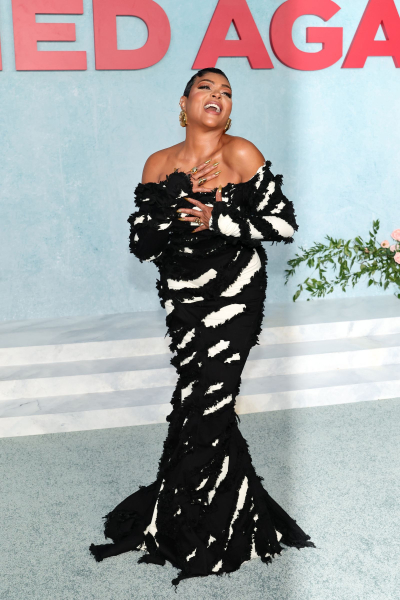
    Also contributing to Henson’s dynamic glam was hairstylist Tym Wallace, who gave her pixie cut a sleek finish with a sculpted, retro swoop up front. Makeup artist Saisha Beecham kept her complexion warm with peachy-brown hues, winged liner, and feathery lashes that complement the texture of her Rick Owens dress. Styled by Kollin Carter, the floor-length black-and-white off-the-shoulder design would have worked with any polish color, of course, but there’s something especially sophisticated about the combo with golden nails.

    Taraji P. Henson posing in a black and white dressPhoto: Getty Images

    Red would have been obvious. A softer champagne gold would have blended quietly into the rest of the look. But this particular shade has a certain intensity that announces itself as both the center of attention and the adult in the room.

  • Why Nicole Kidman’s “Practical Magic 2” Wig Had to Be So Different From the Original

    Why Nicole Kidman’s “Practical Magic 2” Wig Had to Be So Different From the Original

    Sandra Bullock and Nicole Kidman cast spells in a still from Practical Magic 2.Warner Bros. PicturesSave StorySave this storySave StorySave this story

    In The Scenario, reporter Kirbie Johnson goes behind the scenes of the buzziest movies and TV shows to reveal how the best wigs, special-effects makeup, and more are created. For this edition, Johnson spoke with Kim Santantonio and Angela Levin, Nicole Kidman’s personal hairstylist and makeup artist, as well as Janine Thompson and Whitney James, Sandra Bullock’s personal hairstylist and makeup artist, about re-creating the iconic beauty of Gillian and Sally Owens for Practical Magic 2, nearly three decades after the original film. As you may expect, spoilers ahead.

    I’m not the only one who was brought to tears by Practical Magic 2. (I cried twice during the press screening and premiere.) Hairstylist Janine Thompson, who worked with Sandra Bullock on the original film 28 years ago and returned for round two, admits she was overwhelmed with emotion when she returned to set last year.

    “I couldn't help it. I just started to cry,” says Thompson. “You’re remembering things in your life from that time period, right? I found out I was pregnant with my first baby when I worked on [the original film], and when I walked back into that dining room, it all came back…they put that house back together like it had never been gone. It was amazing.”

    Nicole Kidman and Sandra Bullock look at each other in a still from the Practical Magic 2 film.Warner Bros. Pictures

    Some of Thompson’s personal nostalgia made its way into Practical Magic 2, incorporating hair accessories from the original movie into the second one. “In the sequel, [Bullock] wears one in the cemetery scene,” she explains. “I brought a huge box of them and gave them to the [hair department head] for the sequel, and she snuck them in, in different places.”

    It’s a film about sisterhood and, of course, magic. And there was plenty of the latter to take in. We spoke to Thompson and Whitney James, Bullock’s personal makeup artist, as well as Nicole Kidman’s team, Kim Santantonio and Angela Levin, about how they reimagined the beauty of the Owens sisters nearly three decades later, from de-aging special effects to the sorcery of a good wig.

    Nicole Kidman’s Wig Is Not the Same Color—IntentionallySide by side images of Nicole Kidman as Gilly Owens—on the left a film still from Practical Magic in 1996 on the right a...

    Kidman’s wig in Practical Magic (1998) versus Practical Magic 2 (2026), which features more volume, texture, and highlights.

    Everett Collection / Warner Bros. Pictures

    Kidman’s love of wigs is well-known in the industry. But when the original film debuted, viewers were shocked to learn she wore an auburn-and-copper-colored wig to play Gilly Owens. People largely thought it was her own hair at the time.

    To bring Gilly into the 2020s, Kidman’s longtime on-set hairstylist, Kim Santantonio, updated both the cut and color, bringing wigmaker Rob Pickens onboard to help. “He does all of her wigs, and luckily he was able to come to the trailer and show her samples,” says Santantonio.

    Despite having the original wig in their possession, Kidman’s new wigs—she had two, one for backup—didn’t match the OG because the team intentionally added layers and texture to give her hair more movement. “The first wig was very straight, like we flatironed it,” says Santantonio. “It felt heavy [and looked] all one length. This time around, [Kidman] was moving her head a lot, wanting a lot of movement, flickering and flying, so when I put [the new wig] on her the first time, we razor-cut into it around her face, creating a lot of layers.” To style the wig, Santantonio first went in with a curling iron to add volume, then used a flatiron to straighten parts of it, creating a “rock and roll” effect. “In the first film, she had that edge to her,” Santantonio explains.

    When it came to the color of the original wig, the shade was very flat, according to Santantonio. “There was no color variation. So when Rob made [the wig for the second film], we had highlights and beautiful color through it because natural hair has a highlight in it.”

    A major factor in Kidman’s hair-color change is that in the nearly three decades since Practical Magic debuted, filmmaking has come a long way. “When they shot the first one, the camera and the stock were so different than they are today,” says Angela Levin, Kidman’s makeup artist. “Throughout the years, everything changed: the way it's been lit, the colors, like Kim said, the highlights and the lowlights [in the hair] became crucial because the camera will pick it up.” According to Levin, if you take the wig and the film they used in 1998, it looks amazing. If you put that same wig on camera today, it would look totally different because we’re able to see more of the details, and it would not look as realistic.

    Sanda Bullock’s Hair Tells Sally’s StoryTwo images side by side of Sandra Bullock as Sally Owens on the left a film still of Sandra in Practical Magic  and on...

    In Practical Magic 2 (right), Bullock’s hair is more styled and restricted, versus the original film (left), where it’s more relaxed and free.

    Everett Collection / Warner Bros. Pictures

    Since we last saw Sally, she’s lost another husband. Gary is a victim of the Owens family curse, and Sally has made Gilly promise not to reveal to her daughters that they are witches. Sally’s hair, normally swept back into a loose half-up style or relaxed braids, is noticeably more coiffed and pulled back than in the original film.

    “Sally’s had a really rough go of it, and she’s very conservative and very tight because of all the horrible things she’s been through,” Thompson explains. “Her hair is pulled back because she wants to control everything, but Sally isn’t really in control. So pieces are falling out. We very specifically pulled those pieces out to make it look like she can't fight who she is.”

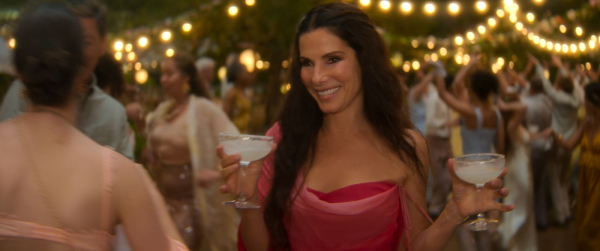
    Sally keeps this guarded aesthetic throughout the film, but once the curse is broken, she lets loose with some midnight margaritas at her daughter Kylie’s wedding, evoking a more laid-back, brighter Sally.

    Sandra Bullock lays on the ground with her arm outstretched in a still from the movie Practical Magic 2.

    Sally has had a really rough go of it since the original film.

    Warner Bros. Pictures

    “Sandy and I had a conversation about her look for the end of the film and wanting to show that Sally had calmed down,” says Thompson. “The curls have relaxed because she finally gets to a peaceful place. We wanted to show that she hasn’t just embraced it—she’s taken control of it.”

    To create Sally’s signature curls in the sequel, Thompson relied on LolaVie, the brand launched by one of Bullock’s close friends, Jennifer Aniston. “It’s the only thing I’ve ever used on Sandy that’s worked this well on her hair,” says Thompson. She used a concoction of three products to create the “effortless” look, starting with the Leave-In Spray and the Detangler, which Thompson said she used “gobs” of on Bullock’s wet hair. “We let it dry overnight and put the LolaVie oil all through it [the next day] to break up the curls.” Once air-dried, she used both a half-inch and a one-inch curling iron to add curls for continuity.

    Sandra Bullock smiles holding two margaritas in a still from the movie Practical Magic 2.

    Bullock, as Sally, let’s loose at her daughter’s wedding. Her loose waves reflect that.

    Warner Bros. PicturesThe FX Magic Employed During That Flashback Scene

    At the top of the film, there’s a short flashback to when Gary passes away, and we see Sally and Gilly around the time the first movie was filmed, employing the use of de-aging technology to take Bullock and Kidman back to their early 30s. Whitney James, Bullock’s makeup artist, said for that scene they couldn’t rely on digital filters alone, keeping the makeup clean and minimal given Sally’s emotional state (and to complement the AI technology).

    In the first film, James says Sally’s brows were thinner, and she had a “fresher, more flushed cheek” versus the more chiseled features she has in the current day, which she emulated through makeup for the flashback scene. She also wears eyeliner on her lower lash line, which was part of Bullock’s look from the first film. “[I was] looking at the pictures from then and getting as close as we could [to the original], still making her look good, and then being able to de-age. It was a balancing act in all ways.”

    Nicole Kidman and Sandra Bullock look forward in shock in a still from the movie Practical Magic 2.

    For the sequel, Kidman and Bullock’s makeup shifted from the first film.

    Warner Bros. PicturesGilly’s Enchanting Makeup

    If Bullock has a more natural, matte makeup look in the sequel, Kidman’s vibe is more whimsical and luminous to juxtapose the personalities of the sisters. “The character already existed, so we did have to allow the audience to see the girl that they knew from the first film,” says Levin. “But I wanted to add a little sparkle,” normally a no-no on camera, but something that a story about witches would allow for.

    “When you do movies, you don't really use anything sparkly because the camera tends to pick it up tenfold, and sometimes it's not very realistic,” Levin explains. “But in this case, because the movie is not very realistic, I wanted to add something that’s not your everyday routine.”

    Levin didn’t use dark eye shadow shades, instead focusing on beige and gold tones with a subtle shimmer. The blush she used, which received many compliments on set, was “transparent” and gave a dewy look to the skin. “It didn't look like something that was applied; it looked like something that came from within,” adds Levin, who broke out Dior Beauty’s Rosy Glow Radiance pH-Activated Blush Stick in Pink Lilac for the job.

    Levin also dipped into cool tones of lilacs, lavenders, and grays. “Those are all colors that really complement [Nicole’s] eyes and her skin tone,” she says, giving a shout-out to the Lisa Eldridge’s Betty Eyeshadow palette she used on set. “I could have gone with browns, but that wouldn't have been the mystical, good witch kind of girl. Every [traditional film makeup] rule was something I ignored because I just wanted to evoke that mystical feeling.”

  • Is the Dyson Toothbrush Worth $499? We Asked 4 Dentists.

    Is the Dyson Toothbrush Worth $499? We Asked 4 Dentists.

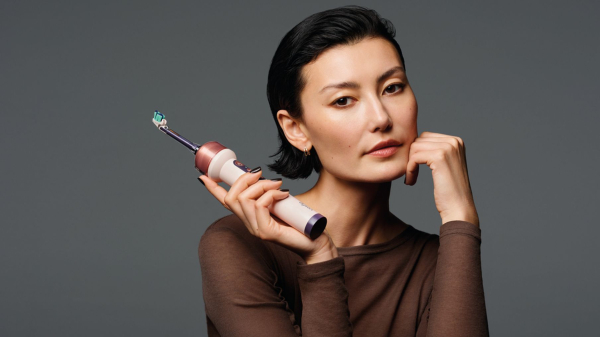
    A model poses with the new Dyson CameraJet tootbrush in the rose gold color.DysonSave StorySave this storySave StorySave this story

    Oral healthcare doesn’t often make the global news cycle, but earlier this week Dyson added a new gadget to its product lineup that inspired a flurry of headlines. And no, it’s not a mini vacuum for your teeth (although… Are you reading this Sir Dyson?). The engineering behemoth announced it would be adding an electric toothbrush to its high-tech offerings, called the CameraJet. Oh, and it costs $499.

    For those whose feeds have not been inundated with details of this toothbrush this week: The CameraJet simultaneously brushes and flosses by emitting a fan-like spray of mouthwash (or water) directly into the gaps between your teeth as the brush head continuously oscillates. The flow of the liquid is not constant, however, as it usually is with a water flosser. Underneath the jet nestled underneath the brush head is a 100mm-pixel macro lens the size of a pencil tip that captures 28 images per second. Those images let the brush detect when it’s arrived at a space between your teeth and trigger the jet accordingly. You need to use a toothpaste and mouthwash (if you don’t use water) that are SLS-free because anything that foams up could interfere with the camera and make its gap-detection less precise. Dyson has also made their very own CameraJet-friendly toothpaste and mouth rinse (as they say in the UK), but they aren’t available just yet.

    Last spring, we were the first to behold the CameraJet when Allure’s executive editor Jenny Bailly traveled to the company’s labs in southwest England and swore herself to secrecy. Dyson operates like the CIA or NSA in terms of its commitment to need-to-know-culture—until just before launch we were only referring to the CameraJet by code name in our communications with the brand. So we were unable to include independent expert opinions in our initial story because we had agreed not share any information about this device until it was announced to the public on September 1.

    And when it was, people had a lot to say—especially on Dyson’s post announcing the launch. “For $500 it better take X-rays and straighten my hair,” one person commented, while another said, “oh great, another camera I’ll have to put tape over.” Several shared this sentiment: “Overstimulated but very intrigued.” Even Listerine weighed in on Instagram with their own post that read simply, “Friendly reminder: Listerine reaches your teeth, gums, tongue, cheeks, and everything in between to complete your oral care routine. No cameras. No fancy tech. Just a simple swish for a whole mouth clean.” (For the record, according to dentists, Listerine kills germs and freshens breath, but it’s an add-on not a replacement for brushing or flossing—either with water or a string.)

    In the last couple of days, our feeds have been filled with content from non-dentist influencers who were gifted a toothbrush by Dyson, but our team as a whole has so far seen only one “I tried it” video from a dentist, a group that perhaps didn’t get the same level of seeding just yet. So this week—once the CameraJet was out of the bag—we called four dentists to get their thoughts on the most expensive toothbrush in the 5,000-year history of oral hygiene. None has received a toothbrush from Dyson to test (or decided to invest just yet) so they are speaking only from what they have seen and read about the device.

    What are dentists saying about Dyson’s new CameraJet?

    The dentists Allure spoke with were on the whole intrigued and/or impressed by the CameraJet. “Anything that can make patients more consistent with their oral hygiene gets my attention,” says Brian Kantor, DDS, a cosmetic dentist at Lowenberg, Lituchy & Kantor in New York City. “The idea of combining brushing and interdental cleaning into one routine makes a lot of sense, particularly because one of the biggest problems we see is that patients brush but don't consistently floss.” Dr. Kantor won’t be recommending the CameraJet to his patients just yet though: “I want to see how it performs in the real world over time before I tell patients they need to go out and buy it.”

    Dr. Vanna Stone, DMD, a dentist at Gentle Caring Dentistry in Livingston, NJ, would also like to see the results of clinical trials. Dyson has told Allure that they did both internal and external lab testing showing that the CameraJet is more effective than the market leaders at removing plaque. But the only data that they have been able to provide to us is a four-week study of 60 subjects, comparing the results of a manual toothbrush and a CameraJet. The CameraJet came out on top on every metric—but “so would an Oral-B or Sonicare electric toothbrush,” says Dr. Stone. (She currently recommends both to her patients, and is partial to the Oral-B herself.) “I want to see a study comparing the results of a Sonicare or Oral-B, plus floss, to this toothbrush. Are the results equivalent? Better? How much better?” She adds that even if the results are only equivalent, she could see a lot of her patients wanting to buy the CameraJet just because it makes brushing feel more fun.

    At the moment, the CameraJet does not have an American Dental Association seal of acceptance, which means a product was independently tested by dental experts to verify its safety and efficacy. (There are currently 16 electric toothbrushes that have the organization's seal.) But while many consumers and dentists use the ADA seal to help guide them, it’s not the end-all be-all of dental care recommendations—manufacturers have to submit their own products to be considered, and applications start at $20,000. Michael Wei, DDS, a cosmetic dentist based in Manhattan, says his favorite toothbrush to recommend to his patients is the Oral-B Pro 1000 Power Rechargeable Electric Toothbrush, which isn’t currently ADA-approved, although two other electric Oral-B toothbrushes are.

    What do they think of the idea of a toothbrush with a camera?

    The itty-bitty camera in this toothbrush isn’t just there to guide it to the gaps in your teeth, the 28 images it captures per second are also pieced together and turned into a real-time video you can watch on the Dyson app.

    Dr. Wei thinks the camera is the “biggest positive” of the CameraJet because users can monitor their teeth as they brush, allowing them to see any spots they’re missing in real time. Dr. Kantor is also interested in the camera as an educational tool. “My only concern is that patients shouldn't become overly focused on diagnosing themselves from what they see on a camera,” he adds. (It’s true: Studies have shown that health-tracking devices can reinforce unhealthy obsessions.) “Seeing something unusual doesn't necessarily mean there's a dental problem, and a camera in a toothbrush certainly doesn't replace a dental examination,” says Dr. Kantor. Although don’t take that comment to indicate that there’s a turf war brewing here. When we asked Dr. Stone if she’s afraid a toothbrush this high-tech will put her and her peers out of business, she laughed. “I wish I was that optimistic.”

    Beyond the camera, Dr. Wei isn’t too sure about the rest of the gadget’s offerings. “It seems that many other features may have been added for the sake of making the most luxurious and up-to-date toothbrush, which may cause this product to become more of a fad than an everyday item,” he says.

    There are also understandably some concerns about the surveillance aspect of a toothbrush with a camera. None of the dentists we spoke with touched on this, but some of the consumer feedback on the tool refers to it as “invasive” and “a privacy nightmare waiting to happen.” According to Dyson, though, the content taken of the inner workings of your oral cavity are not stored on its app or in the cloud.

    Does the Dyson toothbrush replace flossing?

    Every dentist Allure spoke with said this device should absolutely not take the place of regular flossing. “If teeth are tight or crowded, you need traditional floss,” says Dr. Stone. “You really need to snap that floss between the teeth [to remove plaque].” And then there’s this: A post from an Irish dentist who tested the CameraJet this week and says that there was both plaque—and some chicken—between her teeth after using it. She had done exactly what Dr. Stone recommended to us as a testing technique: Use regular floss after completing your two minutes with the CameraJet and then pull out the old-fashioned string—is there anything on it when you’re done? So far the CameraJet has passed this test for the Allure editors who have been using it this week (no chicken), but we don’t have the “plaque disclosing tablets” that Dr. Bronagh Keane used in her trial. And our testers have agreed that their teeth do feel very clean after using the new Dyson tool.

    The CameraJet also shouldn’t take the place of regular water-flossing, says Dr. Stone. She recommends water-flossers like the Waterpik not for cleaning between the teeth, but for patients who have pockets under their gums, or bridges or crowns that make an area inaccessible for a brush or floss. You need a stream of water to clean them out. From what she knows so far about the CameraJet, it doesn’t seem designed to address that need and is designed only to clean in between the teeth.

    Though impressed with the CameraJet, Dr. Kantor still considers traditional floss the gold standard for cleaning teeth, with an important caveat: for someone who flosses properly every day. “For the enormous number of patients who simply don't floss consistently, a device that automatically cleans between the teeth every time they brush could potentially be a significant improvement over what they're currently doing,” he says. And for patients, often older patients, who have lost dexterity in their hands and are unable to use traditional floss, the CameraJet could be a great option, adds Dr. Stone.

    Is the $500 price tag for the CameraJet worth it?

    Let’s run the numbers: For $500, you can purchase approximately 360 basic Colgate toothbrushes, the ones with zero bells and whistles and most definitely no cameras. If you replace your toothbrush every three to four months, as most dentists recommend, that stash would last you… almost 104 years. But most dentists recommend electric toothbrushes, which run you anywhere from $20 to $380 for the Philips Sonicare 9900 Prestige Rechargeable Electric Toothbrush. (Last year’s Best of Beauty Winner, the Oral-B iO Series Electric Toothbrush, costs $99.) Dr. Stone says even an electric toothbrush on the pricier end can be worth it, though, “because some can last you almost a decade.” The CameraJet has a two-year limited warranty (like most of its competitors) so you’re on the hook for a new one if anything happens after the initial 730 days.

    Dr. Wei says he’d have no problem recommending the CameraJet to his patients. “For those with worsening teeth conditions, like gum disease and emerging cavities, this product is certainly worth the $500 price tag,” he says. But he also acknowledges that “for most of the average toothbrush-owning world, this product may be seen as more of a luxury, containing features that—while interesting and high-tech—may not justify the price in the long run.”

    In the press release for the CameraJet, Dyson cites a 2025 World Health Organization statistic that 3.7 billion people are affected by oral diseases globally. But of course a $500 toothbrush is unlikely to do much to change that number since more than 3.69 billion of those people can’t afford it. (For some context, in Burundi, one of the poorest countries in the world, $500 is twice the annual per capita income.) In terms of the most exciting oral health game-changers, Dr. Stone is still going to give her vote to fluoridation. “It was cost effective and had such a huge impact,” she says. “That was a huge breakthrough.”

    “No toothbrush is worth $500,” says Ivona Igerc, DDS, a dentist who practices in London. “A standard $10 manual brush or a $70 sonic toothbrush removes plaque just as effectively. High-end tech doesn't change the laws of friction or fluid dynamics.”

    Dr. Kantor agrees. “Ultimately, I don't care whether a toothbrush has AI, a camera, or an app just because those features sound impressive,” he says. “I care whether my patients' mouths are healthier because they're using it.”

    The way that most of these dentists spoke about the CameraJet is actually quite similar to the way dermatologists talk about which sunscreen to buy: Whichever one makes you use it consistently—no matter the price tag—will always end up being worth it. As Dr. Stone says, “if it excites you and you want to spend $500, I fully support your oral care journey.”

  • Pamela Anderson Brought Classic Movie Star Hair to Venice—See the Photos

    Pamela Anderson Brought Classic Movie Star Hair to Venice—See the Photos

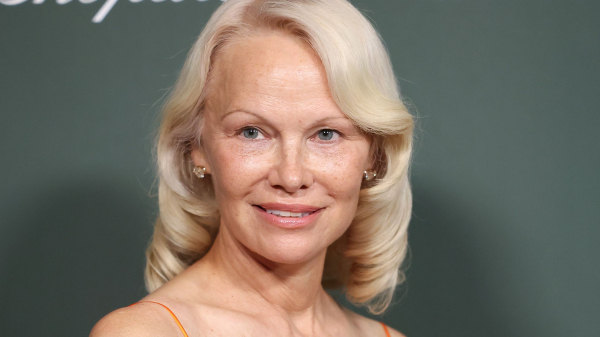
    Pamela Anderson wears an orange dress with a sculpted '50s bob.Getty ImagesSave StorySave this storySave StorySave this story

    Pamela Anderson is a classic film aficionado. Anyone who has seen her Criterion Closet episode knows that she's a true-blue movie fan, and her love of movies runs much deeper than a rewatch or two. In addition to her deep knowledge of cinema classics and underrated gems, she often incorporates film references into her hairstyles and outfits, spanning French New Wave and Old Hollywood alike. (Her shaggy red '80s bob from fall 2025 was inspired by French actor Marlène Jobert.) For her trip to the 2026 Venice International Film Festival in Venice, Italy, Anderson looked like she walked straight out of a classic film, bringing the glamour from the airport to the red carpet. Ah, pure cinema!

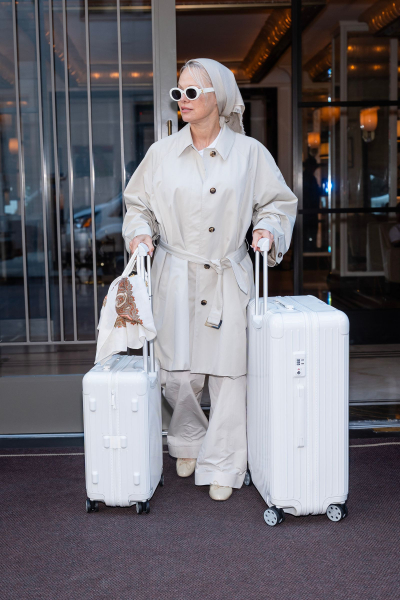
    Pamela Anderson heads to the airport with her hair wrapped in a scarf.Getty Images

    While heading to the festival, Anderson was snapped in New York City looking like the definition of a movie star; her platinum blonde hair was pulled back and covered with a dove gray scarf that matched her outfit and her luggage. How's that for coordination? Scarves continue to be a go-to for stars and regular folks come summertime, bringing a certain Audrey-Hepburn-in-Roman Holiday-esque energy to even the most casual 'fits. Plus, nothing looks more glamorous than untying your scarf and letting your hair fly in the breeze as you sail in one of those iconic Venetian water taxis!

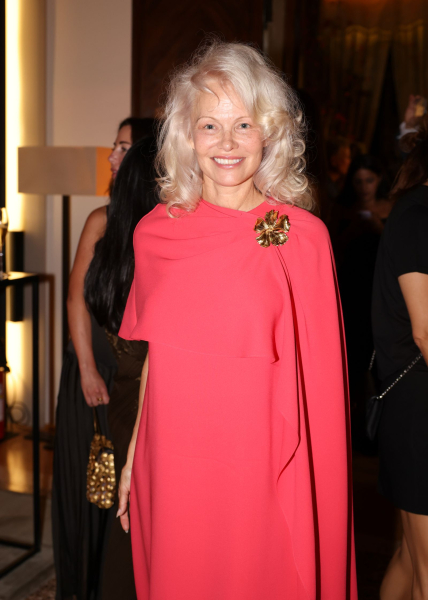
    Pamela Anderson smiles in a pink dress and fluffy curls.Getty Images

    Once Anderson touched down in the famed city of canals, she attended a cocktail party with some major va-va-voom volume, her platinum curls teased and tousled for a bombshell bedhead look—more free-spirited ‘60s than polished ’50s glam, and beyond charming against her pink party dress.

    Pamela Anderson wears an orange gown and pageboy hairstyle.Getty Images

    At the amfAR Gala, Anderson transformed once again, this time with a Marilyn Monroe-style pageboy that was sculpted to perfection, with her hair curled precisely under to cup her cheekbones like a ‘50s icon. (The orange dress is also very Monroe.) We’d love to see Anderson's moodboard for these big events—and trust that some of her looks are definitely on ours for the months ahead.

  • How Corsets and Bras Have Helped Reinforce Beauty Standards Throughout History

    How Corsets and Bras Have Helped Reinforce Beauty Standards Throughout History

    How Corsets and Bras Have Helped Reinforce Beauty Standards Throughout HistoryBenjamin Kaufmann / Trunk ArchiveSave StorySave this storySave StorySave this story

    The inaugural season of Allure Perspectives will explore one of the most controversial and medically researched parts of a woman’s body: breasts. Through expert interviews, personal stories, and historical context, the podcast series, hosted by editor in chief Jessica Cruel, will examine how breasts intersect with beauty, health, identity, sexuality, and culture. In our second episode, Cruel talks with fashion historian Valerie Steele, PhD, about the cultural history of bras, corsets, and other undergarments. Subscribe wherever you get your podcasts for new episodes every week.

    Breasts have always been “an issue in fashion,” Valerie Steele, PhD, director of the Museum at the Fashion Institute of Technology and one of the leading experts on corsets, tells Allure editor-in-chief Jessica Cruel on the latest issue of the Perspectives podcast. “They are a part of the female anatomy, and you have to accommodate them in some way.”

    Of course, it’s not only women who’ve worn supportive undergarments. “Men would sometimes wear corsets if they were riding horseback,” Dr. Steele says. “We see men at the gym today wearing what are effectively corsets when they’re lifting weights.” But the bra, in particular, has played a complicated role in women’s history: a symbol of feminine empowerment, a means for physical support, and a tool of the oppressor all at once.

    In the second episode of Perspectives, Cruel and Dr. Steele explore those often-conflicting narratives around undergarments, how bra and corset design has changed with nearly every decade, and what they predict will come next.

    How undergarments have helped reinforce beauty standards

    “You can date corsets by the way they are shaped and made,” Dr. Steele says. There are hourglass corsets, barrel-shaped corsets, and corsets shaped “like an ice cream cone that pushed the breasts up.” Corset design changed often to emphasize each era’s standard of what an ideal body looked like. “They’re never just a functional thing,” she says. “They were always a part of idealizing the body according to that period and that culture’s sensibility and taste.”

    Around 1900, the sein du jour was a “mono bosom … all kind of one big lump in front,” Dr. Steele says. In the 1920s and ‘30s, for example, “the ideal [breast] was small,” Dr. Steele says. “Most people didn’t live up to that ideal.” Flattener bras helped women of that time who wanted to reduce the appearance of their larger breasts. It’s no wonder, then, that the 2010s era of slim-thick idealization gave rise to modern-day corsets in the form of ultra stretchy shapewear.

    How the tango influenced changes in undergarments

    It’s widely said that World War I had the biggest impact on changing bra design to be softer and more minimalist: Metal was to be used for the war efforts, not for boning in ladies’ undergarments, the rumor goes. But Dr. Steele says that’s not quite true. “One of the big influences, actually, was the tango,” she says. “You couldn’t bend backward in a boned corset…there’s no question that as women got more into sports they developed … corsets that were easier to wear.” And, OK, maybe the war was a bit to blame: As women entered the workforce while men were off fighting, they needed undergarments that would allow for a wider range of movement.

    The power of a well-fitting bra

    Nowadays, anyone can get a bra that at least looks fancy, but Dr. Steele isn’t convinced that our era of overconsumption is a great thing. “I’m afraid that mass production probably has just made us less aware of what [good bras are] supposed to look like,” she says. “It would be better to have three good bras than 30 mediocre bras.”

    It’s why she wishes more people would invest in a well-fitting bra. “A custom bra would beat out even a sports bra [in comfort] because it would really be made just for you.” Dr. Steele recalls wearing a custom-made, 1880s-style corset to a party. “People kept saying ‘Isn’t that uncomfortable?’ And I said, ‘No, but my feet are killing me in high heels.’”

    Listen to the episode:

    For more on the fascinating history of bras, corsets, and other undergarments—plus what Dr. Steele predicts will come next in lingerie technology—listen to the full episode below. (Available on Apple Podcasts, Spotify, or wherever you listen to podcasts.)

  • Say Hello to Bouncier Waves with These Texture-Enhancing Shampoos

    Say Hello to Bouncier Waves with These Texture-Enhancing Shampoos

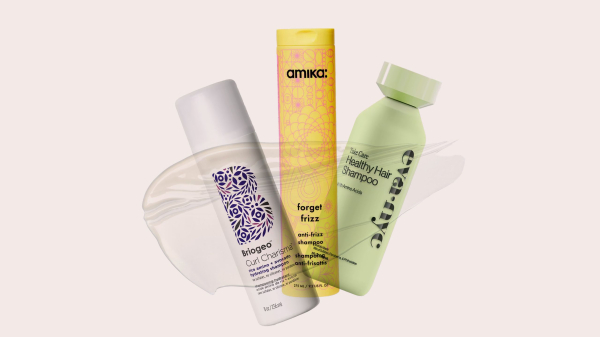
    A collage of shampoo bottles.Collage: Paula Balondo; Source images: Courtesy of brandsSave StorySave this storySave StorySave this story

    If you have naturally wavy hair that falls flat by midday—or just fails to hold any shape whatsoever—you might need to rethink how you’re washing. The best shampoos for wavy hair can be crucial when it comes to bringing life back into your strands. And while many shampoos these days are finally easing up on the harsh, oil-stripping cleansing agents (bye, sulfates!) and replacing them with more nourishing ingredients, the ratio isn't always quite right for waves.

    Unlike curls and coils, wavy hair typically benefits from lightweight hydration—emphasis on “lightweight”—to maintain its pattern. In this case, "more moisture isn’t always better,” says Joseph Chase, a hairstylist based in Los Angeles. “The right amount of moisture is what gives you softness and definition.” In other words, wavy hair is like the Goldilocks of hair types: It needs just enough moisture to reduce frizz and add shine, but not so much that it weighs down, flattens, or stretches out waves.

    Our Top Shampoos for Wavy Hair

    • Best Overall: Living Proof Perfect Hair Day Shampoo, $36
    • Best for Fine Hair: Joico HydraSplash Hydrating Shampoo, $24
    • Best for Frizz: Amika Forget Frizz Anti-Frizz Shampoo, $28
    • Best for Dry Hair: Shu Uemura Urban Moisture Deep Hydration Shampoo, $56

    Frequently Asked QuestionsAccordionItemContainerButtonLargeChevron

    • What ingredients should people look for in a shampoo for wavy hair?
    • How can I hydrate wavy hair?
    • Meet the experts
    • How we test and review products
    • Our staff and testers

    The right shampoo for wavy hair sets you up for an effective and low-maintenance hair-care routine that’s tailored to your texture. Whether you’re in need of a deep cleanse or hoping to add more volume, scroll ahead for tried-and-true shampoos for wavy hair that will keep your pattern defined and full of bounce.

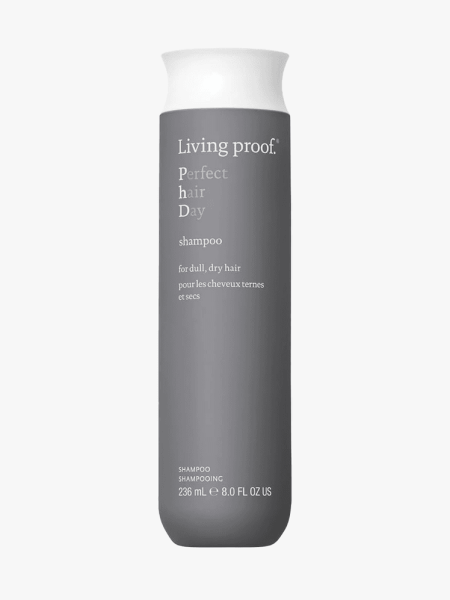
    Best Overall: Living Proof Perfect Hair Day Shampoo
    Living Proof Perfect Hair Day Shampoo in branded component on a light gray backgroundSave to wishlistSave to wishlist

    Living Proof

    Perfect Hair Day Shampoo

    $36

    Amazon

    $36

    Nordstrom

    $36

    Ulta Beauty

    Why we love it: Wavy hair requires a shampoo that meets it in the middle—namely, a formula that balances cleansing oily roots and lightly hydrating lengths without affecting its natural pattern. That’s where Living Proof Perfect Hair Day Shampoo shines. The formula (which has taken home both Best of Beauty and Readers' Choice Awards, no big deal) mimics the key benefits of silicone—like softness, shine, to name a few—without actually using any silicone.

    That leaves strands noticeably fresher and fuller, adding more movement without the heavy feel and buildup that can accompany silicones. “This gives you that balance: hair feels clean and light while staying soft and moving,” Chase says. Bonus: Its rich, satisfying lather has a light citrus scent to make wash days feel just a little more elevated.

    More to know

    AccordionItemContainerButtonLargeChevron

    • Key ingredients: propylene glycol, sunflower and coconut derivatives
    • Sulfate-free: yes

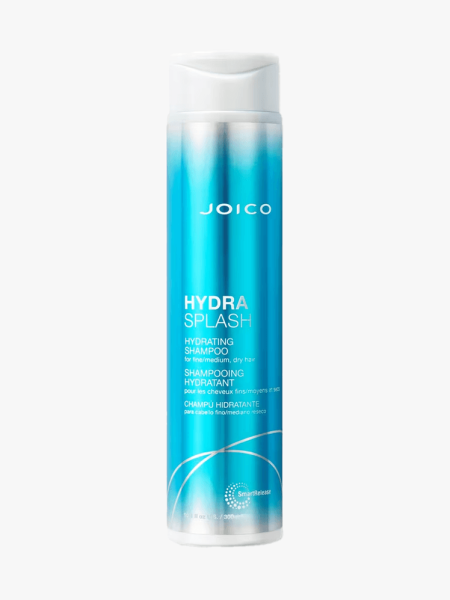
    Best for Fine Hair: Joico HydraSplash Hydrating Shampoo
    Joico HydraSplash Hydrating Shampoo in branded component on a light gray backgroundSave to wishlistSave to wishlist

    Joico

    HydraSplash Hydrating Shampoo

    $24 $20 (17% off)

    Amazon

    $25

    Ulta Beauty

    Why we love it: Lightweight hydration might be the name of the game, but if your waves are especially fine or thin, you might need to skip some of the more moisturizing ingredients. The Joico HydraSplash Hydrating Shampoo swaps the usual suspects for keratin (a protective protein) and natural hydrators like coconut water and sea kelp to replenish dry hair while thoroughly cleansing it.

    In other words, it's a happy medium: “It's less rich than a shampoo for coarser hair, but it still adds all the moisture the hair needs so the finer waves stay light, defined, and bouncy,” says Los Angeles-based hairstylist Rikke Gajda. The formula also relies on a liposome delivery system (which encapsulates some of the active ingredients) to continuously release rosehip oil, arginine, and keratin throughout the day, locking in shine and smoothness long after you rinse.

    More to know

    AccordionItemContainerButtonLargeChevron

    • Key ingredients: coconut water, sea kelp, keratin
    • Sulfate-free: no

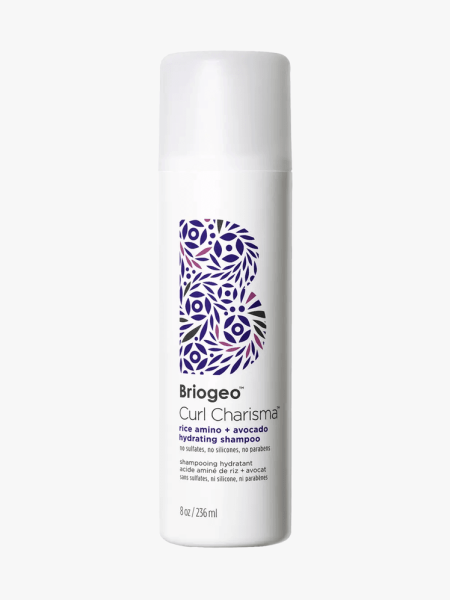
    Best for Mixed Wave Patterns: Briogeo Curl Charisma Rice Amino and Avocado Hydrating Shampoo
    Briogeo Curl Charisma Rice Amino and Avocado Hydrating Shampoo in branded component on a light gray backgroundSave to wishlistSave to wishlist

    Briogeo

    Curl Charisma Rice Amino and Avocado Hydrating Shampoo

    $28

    Nordstrom

    $28

    Ulta Beauty

    $28

    Sephora

    Why we love it: IYKYK: Frizz control starts with your shampoo, which acts as the first step to resolving drynessBriogeo's Curl Charisma Rice Amino and Avocado Hydrating Shampoo is packed with amino acids, tomato fruit extract, and vitamin E to smooth dry cuticles and improve your natural texture, while shea butter and avocado oil leave waves soft and moisturized. “This is going to be great for a wavy-haired person who doesn't necessarily need more volume, but wants their waves to look healthier and more defined,” says New York City-based colorist Tiffanie Richards.

    Translation: It defines and enhances the pattern you already have, so your waves (and curls) look smoother and more polished. For even bouncier curl definition, our editors love pairing the shampoo with the Curl Charisma Rice Amino & Shea Curl Defining Conditioner.

    More to know

    AccordionItemContainerButtonLargeChevron

    • Key ingredients: amino acids, tomato fruit extract, shea butter, avocado oil, vitamin E
    • Sulfate-free: no

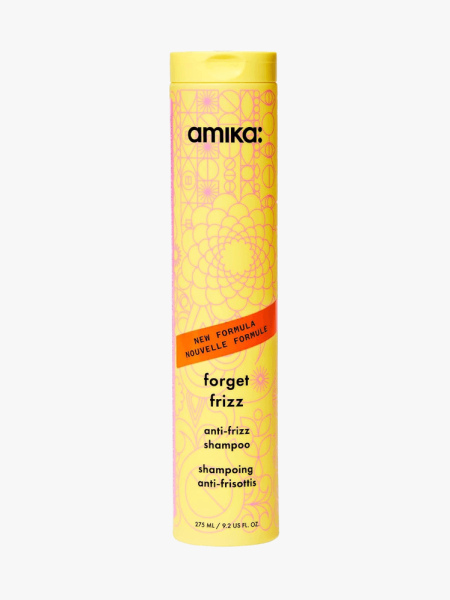
    Best for Frizz: Amika Forget Frizz Anti-Frizz Shampoo
    Amika Forget Frizz Anti-Frizz Shampoo in branded component on a light gray backgroundSave to wishlistSave to wishlist

    Amika

    Forget Frizz Anti-Frizz Shampoo

    $28

    Amazon

    $28

    Ulta Beauty

    $28

    Sephora

    Why we love it: Just as with curly hair, wavy hair is prone to frizz—though usually to a lesser extent. To stop it before it starts, lather with Amika’s Forget Frizz Anti-Frizz Shampoo. Its texture is "slightly on the richer side, so it's amazing for thicker hair because it locks in moisture," Connecticut-based hairstylist Taylor Murphy previously explained to Allure. The sulfate-free shampoo starts with a satisfying trio of sea buckthorn, coconut oil, and water lily extract that nourish from scalp-to-ends, helping to restore shine and make hair easier to style. It’ll keep you covered even on rainy days, with a ‘humidity shield’ technology that blocks humidity and creates a silky barrier over strands.

    More to know

    AccordionItemContainerButtonLargeChevron

    • Key ingredients: water lily extract, silicone, sea buckthorn oil
    • Sulfate-free: yes

    Best Clarifying Shampoo: Ouai Detox Shampoo
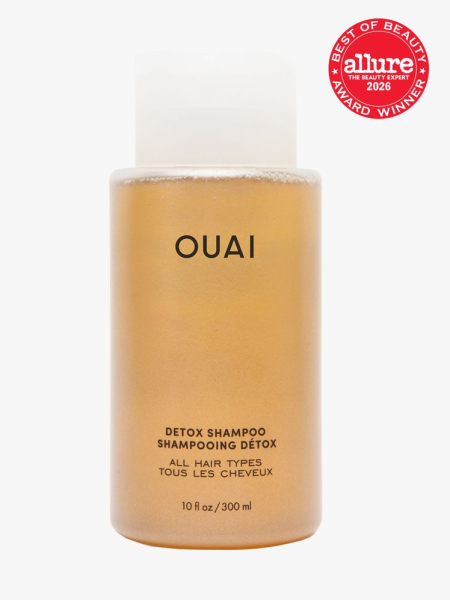
    Ouai Detox Shampoo in branded bottle component on a light gray background with the 2026 best of beauty seal in the top right cornerSave to wishlistSave to wishlist

    Ouai

    Detox Shampoo

    $34

    Amazon

    $34

    Ulta Beauty

    $34

    Sephora

    Why we love it: If greasy strands or buildup-laden roots are weighing your hair down, Ouai’s Detox Shampoo is a go-to for bringing the bounce back to waves that have fallen. It breaks down dirt, product buildup, and grime with apple cider vinegar, which acts as an astringent. For those living in an area with hard water, the formula also consists of chelating agents—ingredients that latch onto hard-water minerals so you can rinse them out—to remove impurities that might be “preventing your waves from absorbing hydration,” Richards says.

    Hydrolyzed keratin, meanwhile, fills in the gaps in the cuticle by improving elasticity and damage caused by daily styling, heat, and environmental stressors. Because it’s a deep-cleaning formula, Richards recommends washing with the shampoo just a few times a month—just be sure to follow with a moisturizing treatment after to keep waves soft.

    More to know

    AccordionItemContainerButtonLargeChevron

    • Key ingredients: apple cider vinegar, hydrolyzed keratin, chelating agents
    • Sulfate-free: yes

    Best for Thinning Hair: Kérastase Densifique Bain Densité Shampoo
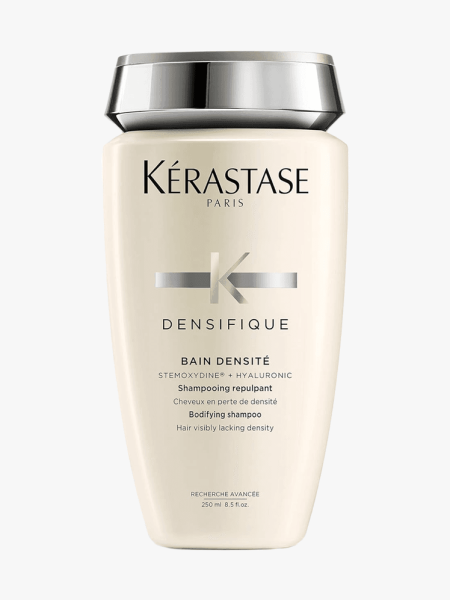
    Kérastase Densifique Bain Densité Shampoo in branded tube component with silver cap on a light gray backgroundSave to wishlistSave to wishlist

    Kérastase

    Densifique Bain Densité Shampoo

    $48

    Amazon

    $48

    Sephora

    Why we love it: When waves start to thin out—whether due to age, postpartum hair loss, or genetic hair loss—they can lose their natural pattern and definition, causing roots to go flat fast. Kérastase’s Densifique Bain Densité Shampoo can help, balancing a deep cleanse with density-boosting (and hydrating) ingredients, including hyaluronic acid, ceramides, and gluco-peptides, to plump the cuticle and reduce breakage from root-to-tip.

    The gel texture lightly clarifies the scalp and volumizes the roots with the help of salicylic and glutamic acids. The result? Hair appears “fuller and stronger without coating it or weighing it down,” says Chase, so strands appear fuller and thicker. The notes of bergamot, pink mint, cedar, and musk turn this thinning hair treatment into a luxury form of self-care.

    More to know

    AccordionItemContainerButtonLargeChevron

    • Key ingredients: hyaluronic acid, ceramides, and gluco-peptides
    • Sulfate-free: no

    Best for Dry Hair: Shu Uemura Urban Moisture Deep Hydration Shampoo
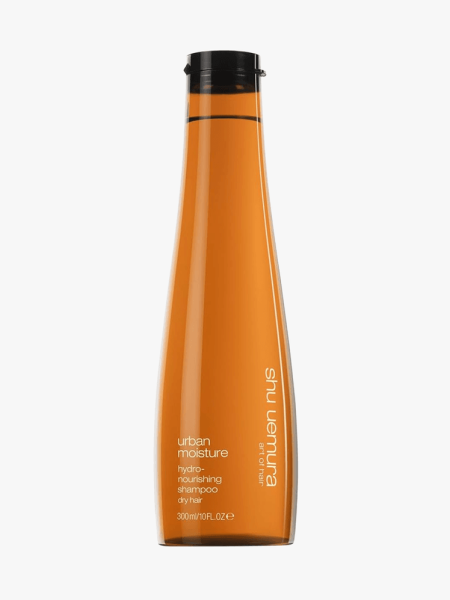
    Shu Uemura Urban Moisture Deep Hydration Shampoo in branded bottle component on a light gray backgroundSave to wishlistSave to wishlist

    Shu Uemura

    Urban Moisture Deep Hydration Shampoo

    $58

    Amazon

    $58

    Sephora

    Why we love it: Dry waves need moisture to thrive, but too much can make them go limp. If that sounds familiar, Michelle Hong, a New York City-based colorist, calls Shu Uemura’s Urban Moisture Deep Hydration Shampoo her go-to for dry, frizz-prone waves. Think of it as an instant hydration boost with protective benefits: The formula relies on humectants (like glycerin and propylene glycol) to help attract and retain moisture levels, as well as antioxidants (such as moringa oil) to protect against environmental stressors, including heat and pollution, that can cause incidental dryness. Another plus: If your hair is dry from color processing, this shampoo is also color-safe.

    More to know

    AccordionItemContainerButtonLargeChevron

    • Key ingredients: glycerin, propylene glycol, Japanese moringa oil extract, Japanese red micro-algae extract
    • Sulfate-free: no

    Best for Color-Treated Hair: Wella Professionals Ultimate Repair Shampoo and Conditioner
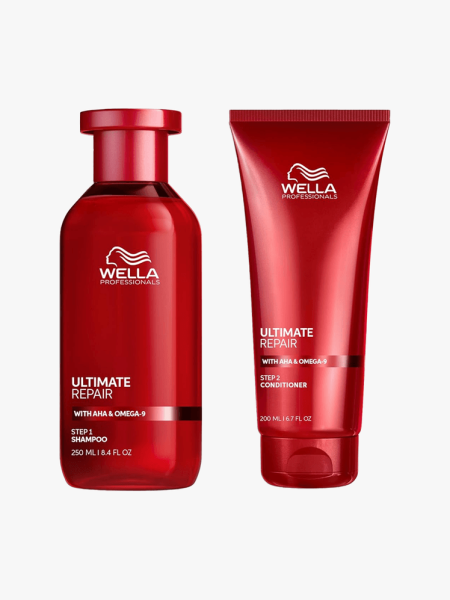
    Wella Professionals Ultimate Repair Shampoo and Conditioner in branded components on a light gray backgroundSave to wishlistSave to wishlist

    Wella Professionals

    Ultimate Repair Shampoo and Conditioner

    $70

    Amazon

    $35

    Ulta Beauty (Shampoo)

    $35

    Ulta Beauty (Conditioner)

    Why we love it: For color-treated waves, the Wella Professionals Ultimate Repair Shampoo targets damage—both from heat and chemical processes—without disrupting your color. The formula leaves a clean slate with clarifying acids— a BHA (salicylic acid) and an AHA (malic acid)—to clear away any build up on the scalp, and strengthens with omega-9 (oleic acid) to support healthier waves from root-to-tip. It also includes the brand’s Metal Purifier technology to detox hard water buildup and harmful impurities (metal deposits, pollution, and grime) contributing to dull and damaged hair. And when paired with its matching conditioner, this moisturizing shampoo and conditioner duo leaves color-treated waves softer and more manageable.

    Tester feedback from commerce editor Sarah Han

    AccordionItemContainerButtonLargeChevron

    “I'm always on the lookout for shampoos and conditioners that intensely hydrate my dry, brittle, and partially color-treated hair without stripping too much of said color—emphasis on the last part! So I was pleasantly surprised when my pale pink stayed intact. (I have a color-depositing shampoo that I use occasionally, but I'm trying to rely on it less.) This Wella duo initially stood out because of its AHAs, which I suspected would be a great clarifying treatment for my scalp, especially as someone who sometimes only washes her hair once a week. (Time flies, ok!) The conditioner also has AHAs, which help repair strands from within the shaft. My hair feels extra soft—softer than it does with other shampoos and conditioners, or even hair masks, I swear—the next morning, so consider me impressed. Thank you, AHAs!” —Sarah Han, commerce editor

    More to know

    AccordionItemContainerButtonLargeChevron

    • Key ingredients: malic acid, citric acid, salicylic acid, glycerin, oleic acid, squalane
    • Sulfate-free: no
    • Best for: damaged or color-treated wavy hair

    Best Drugstore: Eva NYC Take Care Healthy Hair Shampoo
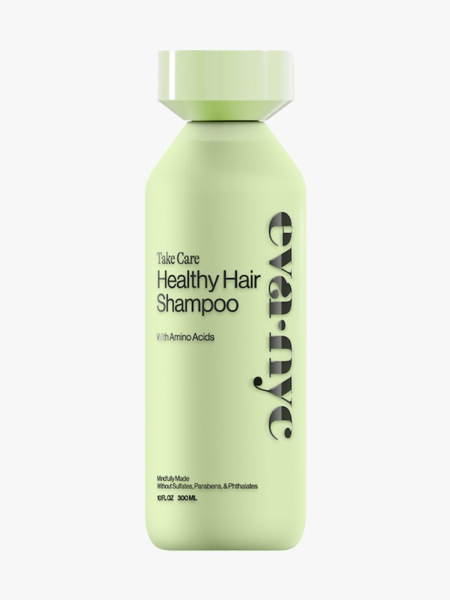
    Eva NYC Take Care Healthy Hair Shampoo light green bottle of shampoo on light gray backgroundSave to wishlistSave to wishlist

    Eva NYC

    Take Care Healthy Hair Shampoo

    $14

    Ulta Beauty

    Why we love it: If you’re a diehard daily hair-washer (we exist!), good news: Eva NYC’s Take Care Healthy Hair Shampoo is gentle enough for everyday use. Designed for limp, oily, and dull hair, the color-safe formula washes away stubborn dirt and grime—common culprits of flat waves—while a lineup of amino acids work to soften and strengthen strands. The formula is also packed with moisture-binding ingredients, including sodium lactate, PCA, and sodium PCA, alongside conditioning polymers that boost shine, softness, and manageability. Dryness? Never heard of her.

    Tester feedback from commerce market editor Sarah Hoffmann

    AccordionItemContainerButtonLargeChevron

    "With curly hair, it's often recommended to wash your hair less frequently to preserve moisture and prevent drying out your already fragile strands. I try my best to adhere to an every two- or three-day schedule, but when life calls for frequent washing, I reach for Eva NYC's Take Care Healthy Hair Shampoo. It's a no-frills formula in the best way—just a solid, gentle cleanse. My hair is pretty fine and easily weighed down, so I can't use hydrating or bonding formulas too often, and clarifying shampoos are too harsh for everyday use. This shampoo is an effective cleanser and adds a touch of softness and shine, a true Goldilocks product." —Sarah Hoffmann, commerce market editor

    More to know

    AccordionItemContainerButtonLargeChevron

    • Key ingredients: amino acids, lactic acid, sodium PCA
    • Sulfate-free: yes
    • Best for: wavy hair prone to oiliness and damage

    Frequently Asked Questions

    What ingredients should people look for in a shampoo for wavy hair?

    Wavy hair might not seem hard to care for, but it comes with its challenges: frizz, dryness, and lack of definition. Light hydrators and gentle cleansers are important components to consider in a shampoo for wavy hair because they gently cleanse and moisturize without weighing waves down. Humectants (glycerin, hyaluronic acid), ceramides, amino acids, proteins, and conditioning ingredients are universally supportive for all wave types, “helping waves feel soft (not crunchy) and also look more polished without sacrificing movement or volume,” says Nashville-based hairstylist Eric Marshall.

    Also, choose ingredients based on your wave type. “Someone with very fine, loose waves probably doesn’t need the same rich formula as someone with thick, coarse waves,” notes Chase. Finer waves will want to opt for lightweight hydrators over rich formulas that can flatten waves. “If it’s coarse or dry, look for more nourishing oils and conditioning ingredients,” says Hong.

    How can I hydrate wavy hair?

    Our experts all agree: The goal for all wavy hair is to hydrate without the weight, starting with your shampoo. As you cleanse, focus on the scalp over the lengths, and apply conditioners from the mid-length down where it matters most for wavy hair. Post-shower, Hong emphasizes that “less is more” for styling products. Specifically, Marshall recommends a styling product “that can help with elasticity, control, and hydrate at the same time,” such as curl creams, hair oils, and texturizing sprays. Simply put: An effective wavy hair routine is equal parts hydrating, defining, and strengthening for bouncier waves.

    Plus, don’t be afraid to wash your hair more frequently: According to Chase, “You don’t need to stretch out wash days just because you have textured hair.” Washing your hair when waves need it the most encourages a healthy scalp and wave pattern.

    Meet the experts

    • Joseph Chase is a hairstylist based in Los Angeles.
    • Michelle Hong is a hairstylist and the founder and creative director of NYC The Team in New York City.
    • Rikke Gajda is a hairstylist based in Los Angeles.
    • Eric Marshall Wright is a hairstylist and owner of Eric Marshall Salon in Nashville.
    • Tiffanie Richards is a master colorist at Louise O’Conner Salon in New York City.

    How we test and review products

    We always enlist a range of testers for our makeup vertical, but hair-care products and tools are another story. While there are certainly products that can be used across different hair textures, lengths, curl patterns, thicknesses, colors (natural and unnatural), and needs, hair products are often created with specific consumers in mind. Many are created in order to address a concern (dandruff, breakage, brittleness) or to work most effectively for a specific hair type (4C curls, wavy hair, gray hair). You wouldn't want to pick up a purple shampoo that's only been reviewed by someone with, say, auburn hair, or a diffuser that's never been tested by anyone with curls—right?

    For our review of the best shampoos for wavy hair, we enlisted the help of multiple editors, writers, contributors, and hairstylists to find formulas that effectively cleanse and hydrate without the buildup. Testers considered performance across four primary categories: efficacy, texture and experience, fragrance, and packaging. For more on what's involved in our reporting, check out our complete reviews process and methodology page.

    Our staff and testers

    A beauty product is a personal purchase. You might be searching for a face cream to address persistent dryness or a new nail product to add to your Sunday self-care routine; you may simply be browsing around for the latest launches to hit the hair market. No matter what you seek or your individual needs and concerns, Allure wants to ensure that you love anything we recommend in our stories. We believe that having a diverse team of writers and editors—in addition to the wide range of outside testers and industry experts we regularly call upon—is essential to reaching that goal.

    After all, can we really say a skin-care product is the "best" for people over 50 if the only testers we've solicited opinions from folks who have yet to hit 30? Can we honestly deem a high-end diffuser worthy of your hard-earned cash if it's never been tested on curls? We're proud that our staff spans a wide range of ages, skin tones, hair textures, genders, and backgrounds, which means that we are able to fairly assess any beauty product that comes into the beauty closet.
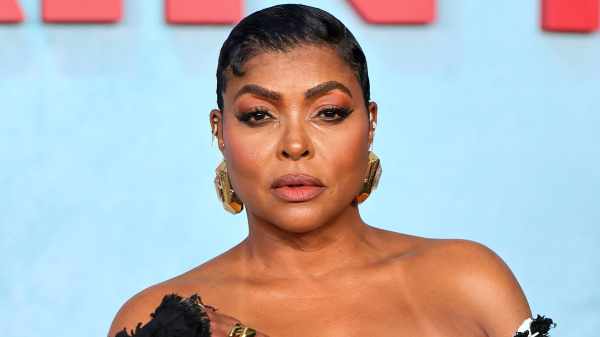

  • Emma Stone’s Hair Is Suddenly So Long — See Photos

    Emma Stone’s Hair Is Suddenly So Long — See Photos

    Emma Stone smilingPhoto: Getty ImagesSave StorySave this storySave StorySave this story

    Plenty of celebrities whip out the extensions when they get the itch for longer hair, but Emma Stone is hardly the first person we think of when it comes to overnight inches. If there's anyone comfortable—and downright stunning—wearing shorter hairstyles, it's her. But it seems even Stone is susceptible to a little above-the-shoulder ennui, because over the weekend, she was seen in a new look that's easily her longest hair in years.

    It was barely four months ago that we were kvelling over how long her hair had gotten since her Oscar-nominated buzz cut (OK, so the buzz cut itself wasn't nominated), hitting right at her shoulders in a newly less-red lob. But her hair has either grown nearly a foot in 16 weeks (highly unlikely), or she's sporting some seriously gorgeous extensions.

    Emma Stone wearing sunglasses and a gray jacketPhoto: Getty Images
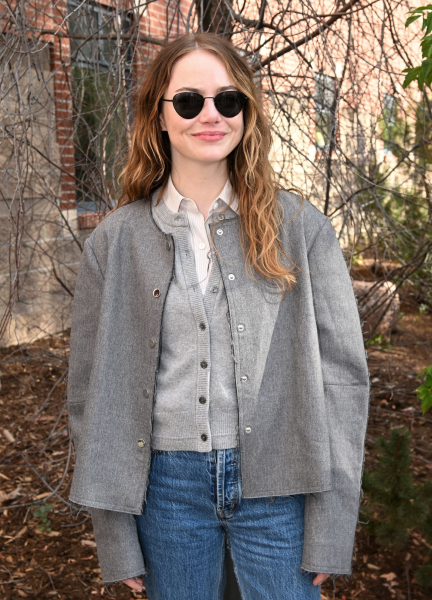
    Stone revealed the new look at the Telluride Film Festival, where she was promoting two different films, You Can See Everything and The Debut. She joined co-stars onstage for discussions about the films, her loose, slightly side-parted waves displayed mostly over one shoulder. Her new highlights are still going strong, with more brightness at the ends and around the face and darker, perfectly blended roots.

    Emma Stone sitting in a director's chair in a brown jacketPhoto: Getty Images

    Is this look for a third, in-progress film? Or perhaps she was inspired by her go-to hairstylist Mara Roszak's own long waves? We may not know until Stone appears in public in yet another new look. But if she wants to stick with long hair for a long time, we certainly wouldn't blame her.

  • Allure Best of Beauty: Live Is Back—Here’s What You Need to Know

    Allure Best of Beauty: Live Is Back—Here’s What You Need to Know

    Graphic of Best of Beauty Live eventSave StorySave this storySave StorySave this story

    There’s plenty to look forward to as summer winds down: crisp air, that first sweater day,, and of course, the arrival of Allure’s favorite season. Best of Beauty is almost here (set your alarms for September 17)—and so is Best of Beauty: Live, back for its fourth year, and tickets are on sale today.

    For much of the last 12 months, our editors have been putting in the work for you: testing thousands of products (and then testing again) to identify the 319 lipsticks, scrubs, shampoos, perfumes, and more that we think are worthy of the word “best” in the year 2026.

    And on Saturday, October 17, we will once again open the doors to our world of product exploration so you can live a day as a beauty editor. Guests at Best of Beauty Live will have the chance to celebrate this year’s award winners and connect one-on-one with the dermatologists, hairstylists, makeup artists, and more that we turn to daily for their expertise.

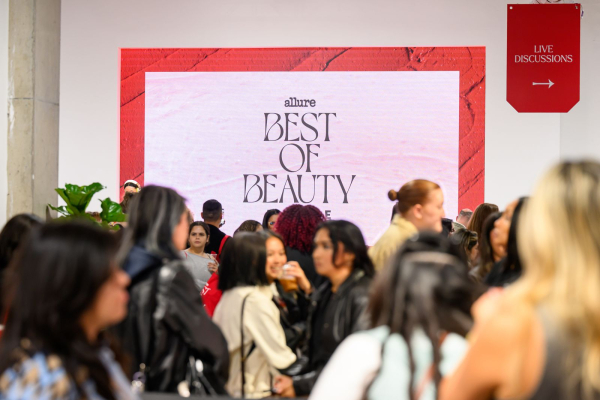
    Wide shot of the crowd at best of beauty live eventPhoto: Sean Sime

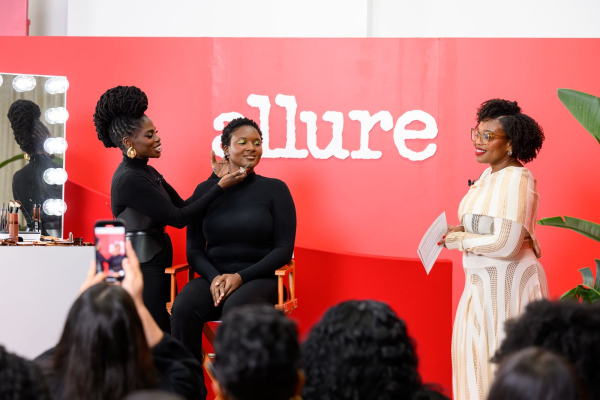
    At last year’s event, Danessa Myricks gave a live makeup tutorial and celebrity hairstylist Mara Roszak demonstrated the “braid facelift” hack months before Anne Hathaway put it on the world’s radar. Attendees posed for selfies with our supermodel cover stars Anok Yai and Alex Consani, got their curls refreshed with Wella Professionals, and had their foreheads smoothed at VIP neuromodulator appointments.

    Danessa Myricks model and Jessica Cruel on the Best of Beauty Live main stagePhoto: Sean Sime

    But no need to be jealous because that was not a once-in-a-lifetime opportunity. This year we’re celebrating 30 years of Best of Beauty, so we’re going even bigger, like huge. On October 17, we’re taking over a larger space, Halo in New York City, giving us even more room for a jam-packed day of beauty.

    Across the daytime and evening sessions, expect skin assessments, mini-manis, opportunities to spruce up your hairstyle with our favorites in the industry. Not to mention guests' favorites: giveaways and product sampling over conversations with the beauty experts, celebrities, and Allure editors. Among them, Amazon Beauty is offering one-on-one makeup artist consultations; Wella Professionals is offering dry hair styling and touch-ups; and Anastasia Soare will give a brow artistry masterclass. And if you needed another reason to make a day of it, select tickets come with hundreds of dollars' worth of full-size products and samples. The Best of Beauty Live bags are treasured for a reason.

    Photo of a woman holding a product bottle at the live event.Photo: Sean Sime

    So, if spending an October Saturday getting expert advice, discovering award-winning products, and hanging out with fellow beauty obsessives sounds 1000 times better than any pumpkin patch, consider this your invitation. Mark your calendar, grab your tickets before they’re sold out (they go fast!), and join us as we celebrate 30 years of Best of Beauty.

    Allure's Best of Beauty LIVE 2026 is presented by Amazon Beauty and Allē with support from Beauty of Joseon, BOTOX® Cosmetic, DiamondGlow®, EltaMD Skin Care, JUVÉDERM®, SkinMedica®, and Wella Professionals.

  • Dua Lipa’s Multicolor French Manicure Says Summer Isn’t Over Yet—See the Photos

    Dua Lipa’s Multicolor French Manicure Says Summer Isn’t Over Yet—See the Photos

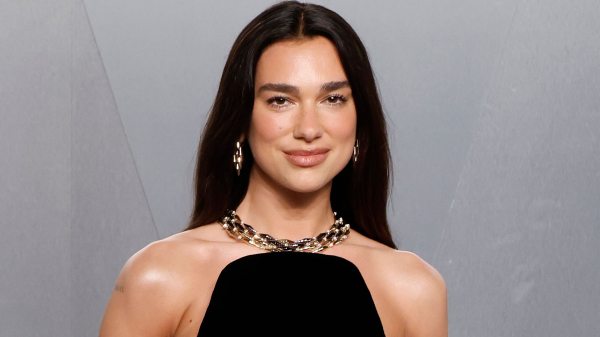
    Dua Lipa poses in a black dress. She wears her hair long.Getty ImagesSave StorySave this storySave StorySave this story

    Dua Lipa isn't quite ready to let go of summer just yet. And to be honest, neither am I! She's keeping the colorful vibes of the sunny season going post–Labor Day (which many of us see as the end of summer despite the fact that it technically doesn't end until September 21st) with a bright, multicolor French manicure that says, “There's still time to (safely) soak up the sun!”

    Lipa's mani made plenty of appearances in her most recent photo dump, which took place during a quick end-of-summer vacation. (Swipe through to see lots of pics of the set.) Her medium-long nails were shaped into classic almonds and painted a variety of cheery colors, with a different French-tip motif on each finger: aqua blue with a pastel yellow tip on her pinky, orange and red on her ring finger, baby pink and yellow on her middle finger, maroon and baby blue on her pointer, and olive and blue on her thumb.

    The colors were distinctly different from nail to nail, but the repetition of certain shades on the base and the tip made them feel cohesive, like a tropical palette that hints at fall in the darker, warmer shades of maroon, olive, and orange. Consider this the newest summer-to-fall transition manicure for anyone who doesn't want to say goodbye to bikinis and SPF until absolutely necessary.

    Instagram content

    If there was ever a time to get creative and have fun with your French manicure, it's now. At the top of 2026, we spotlighted some of our favorite French trends, and Lipa's colorful combo would fit right in with the expressive, unique looks that made our mood boards. Because there are so many shades in her set, it manages to go with nothing and everything at the same time. There's basically no limit to what you can do with a French manicure, including stretching out the season just a liiiiiiitle bit longer. You could easily DIY Lipa's mani with a mix of your favorite summer and fall nail colors and create your own bespoke combo. Honestly, as someone who wishes it could be summer forever, there's a big chance I may just copy this exact manicure at my next nail appointment.

    More celebrity news to know:

    • Emma Stone's Hair Is Suddenly So Long
    • Florence Pugh Elevated the Messiest Bun With the Fanciest Scarf
    • Pamela Anderson Brought Classic Movie Star Hair to Venice
  • Are Compounded Peptide Creams Any Better Than Over the Counter Options?

    Are Compounded Peptide Creams Any Better Than Over the Counter Options?

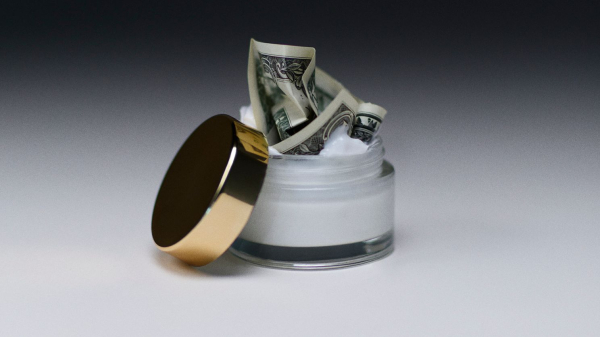
    jar of moisturizer with cash stuff insideGiancarlos KunhardtSave StorySave this storySave StorySave this story

    I wanted to try an unregulated peptide. Over the past six months, I've scrolled countless videos, binged podcasts, and interrogated more peptide-curious people than I can count. I’ve researched all the different versions, from semaglutide to BPC-157, hoping I'd work up the nerve to try one myself—to have the transformation story everyone else claims to be having.

    But the caveats kept stacking up: Most of these peptides aren't approved by the Food & Drug Administration (FDA), and the human safety data, where it exists at all, is extremely thin. Health Secretary Robert F. Kennedy Jr. has been pushing for broader access to compounded, injectable peptides, and this summer an FDA advisory committee recommended allowing compounding pharmacies to manufacture six wellness peptides, despite FDA staff—as well as parts of the medical community at large—raising concerns about insufficient evidence around safety and efficacy.

    As a beauty editor, I’ve been most tempted by GHK-Cu, a copper peptide that’s become widely known on the internet as the "beauty" peptide. Originally studied for wound healing, research suggests it can support collagen production, improve firmness and elasticity, reduce inflammation and oxidative stress, and aid in skin repair. Hailey Bieber says it’s amazing.

    People are already injecting GHK-Cu, even though the FDA has not approved it for injection and has flagged multiple safety concerns with compounded injectable GHK-Cu, including immune reactions related to impurities and peptide aggregation, while noting limited human safety data.

    Topical GHK-Cu, however, is another, less risky-sounding story. Non-injectable GHK-Cu is being evaluated by the FDA for use in traditional pharmacy compounding and, for now, falls under the agency's Category 1 interim policy. That means the FDA hasn’t approved the ingredient for use, but also hasn’t (yet!) identified any significant safety risks with non-injectable GHK-Cu and won’t take any legal action against a pharmacy that sells it.

    Regardless of the approval status of non-injectable GHK-Cu, copper-infused skin-care creams are (at least for now) considered a cosmetic, not a drug. As long as any company selling them doesn't make medical claims (for instance, they could say that the cream “smooths skin” but not that it “reduces cellulite”) the products wouldn’t be subjected to pre-market safety approval by the FDA. “Any cosmetic product can make claims for their proprietary blends or ingredients with trademarked names without necessarily disclosing the potency of the ingredient or proof of claims,” Nancy Samolitis, MD, a board-certified dermatologist in Los Angeles, says.

    I knew I could buy a copper-peptide serum without a prescription, but I was convinced that getting GHK-Cu compounded at a pharmacy meant I would be getting the good stuff: purer, stronger, more potent. I worked with Feelin Good Wellness, a peptide therapy provider that works with physicians and pharmacies to create customized routines based on their health history and bloodwork. The service offers physician oversight, though the doctors I encountered were not dermatologists and appeared to focus primarily on hormone and sexual health. The founder of Feelin Good is Carlyn Mungle, who is not a medical professional but found a path into wellness during the pandemic, when she started a business to help provide COVID testing. A huge fan of peptides herself, Mungle swears by GHK-Cu.“It's a great tool to have in your toolbox," she tells me. "It's good for maintaining healthy skin like you have and supporting healthy aging."

    I had also seen enough videos on Instagram and TikTok to convince me that copper peptides were going to change my life, so I filled out a medical intake form, which asks questions about your wellness goals and what peptides you are interested in. Then, I spoke with a nonclinical patient liaison from the Feelin Good Wellness team who is trained in peptide education but is not a nurse or physician. They walked me through what GHK-Cu is and coordinated communication among me, the physician, and the pharmacy. Shortly afterward, a physician approved my prescription, and my 0.5% GHK-Cu cream was on its way. While Feelin Good Wellness advertises this as a moisturizer, I found that it wasn't hydrating enough for my skin on its own, so I treated it more like a serum step and layered a heavier cream on top. The jar was gifted to me for review consideration, but it normally costs $350.

    It looked and smelled medicinal—which seemed right? Surely the ugly green pharmacy cream was doing something my pretty little serums weren't.

    When I opened the jar, the metallic scent hit my nostrils hard. The cream was a gray-green hue and had none of the sensorial bells and whistles I was used to in skin care at that same price point. It looked and smelled medicinal—which seemed right? Surely the ugly green pharmacy cream was doing something my pretty little serums weren't.

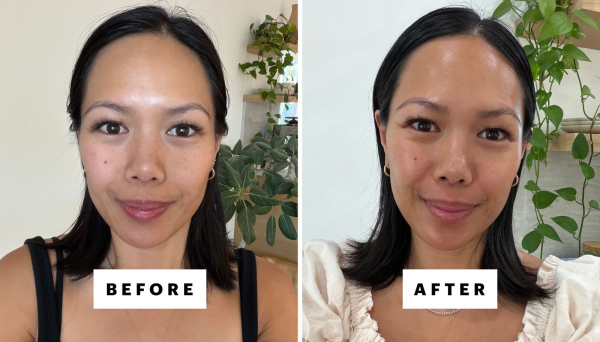
    For the next eight weeks, I applied it every day, followed by a moisturizer. My skin is dry and sensitive, and I've never been able to use retinoids with the consistency dermatologists would like me to, but GHK-Cu caused no burning, peeling, or irritation. And after a few weeks of daily use, my skin looked good. Like, really good. I had less redness in my cheeks, my skin looked and felt bouncier, and my complexion looked brighter overall.

    writer sara tan before and after trying a compounded copper peptide creamCourtesy subject

    I loved the results enough to want to keep using it, but the question was whether it was necessary to spend $350 to keep getting the benefits I was officially convinced GHK-Cu was giving me.

    Does GHK-Cu Actually Work in Skin Care?

    Dr. Samolitis was curious too. When I told her what I was testing, she went digging through the published research. "I went straight to PubMed for the real data," she says. Dr. Samolitis was pleasantly surprised with what she found.

    The human data is limited, but one finding in particular caught Dr. Samolitis's attention. She pointed me to a published review of GHK-Cu research that describes a study of 20 women around age 50 in which researchers applied different creams to the thighs and measured collagen production using skin biopsies. After one month, collagen production increased in 70% of the women treated with GHK-Cu, compared with 50% of those treated with vitamin C and 40% treated with retinoic acid.

    "It had a pretty significant increase in collagen production—more than with tretinoin, and more than with vitamin C," says Dr. Samolitis.

    Retinoids are considered the gold standard for treating signs of aging, but as I mentioned, my skin often can’t tolerate them. The GHK-Cu cream, on the other hand, caused me no irritation. "I think it's a good retinol alternative," Dr. Samolitis says, though the two work differently—GHK-Cu supports skin repair and collagen production, while retinol accelerates cell turnover and prevents collagen breakdown—and can potentially coexist in a routine.

    Still, we’re in the early stages of research on the ingredient, and much of the published studies (like the one mentioned above) have been done by the research and development teams of cosmetic brands who are eager to sell GHK-Cu. “All of the human studies in general with GHK-Cu are small and not randomized controlled trials, so we really need to see more data on this ingredient to accurately describe its benefits,” Dr. Samolitis says. “But it seems to have some promise.” In fact, she was impressed enough by the research that she bought two copper-peptide serums herself. Both were over the counter.

    Is Compounded GHK-Cu Better Than Over-the-Counter Copper Peptides?

    When I asked Dr. Samolitis if my compounded cream was likely any better than what she had bought, the dermatologist was skeptical. "Honestly, I'm not convinced you need it compounded," Dr. Samolitis says. Neither were the other experts I interviewed.

    Compounding means a pharmacy prepares a medication specifically for an individual patient based on a prescription. In the case of GHK-Cu, the pharmacy typically purchases the peptide as a bulk pharmaceutical ingredient and incorporates it into a cream or gel base, explains Ethan Melillo, PharmD, CDOE, a pharmacist and assistant professor of dermatologic pharmacotherapy at the University of Rhode Island.

    This type of custom product blend can be useful if you need a particular concentration, can't tolerate a common ingredient, or require a specific base. I didn't have any of those needs. I just thought compounded meant better.

    “A compounded prescription does not automatically make a copper-peptide product stronger or more effective.”

    "A compounded prescription does not automatically make a copper-peptide product stronger or more effective," Melillo says. The higher price can reflect the medical consultation, pharmacy labor, small-batch preparation, packaging, shipping, and testing—not necessarily a more efficacious ingredient.

    In terms of potency, my cream contained 0.5% GHK-Cu. Meanwhile, copper-peptide serums with even higher concentrations are sitting on shelves at Sephora and Ulta Beauty for a fraction of the price. Dr. Samolitis herself bought The Ordinary's Multi-Peptide + Copper Peptides 1% serum, which cost her $32, as well as the Biossance’s Squalane + Copper Peptide Rapid Plumping Serum, which does not disclose its GHK-Cu concentration, for $69. You can also purchase a prescription GHK-Cu serum containing 3% through Musely for $41/month or a 0.5% concentration serum through Agency for $165. It’s still too early for Dr. Samolitis to have noticed any changes in her skin, but she says that she likes the texture of the Ordinary’s serum the most so far.

    More Copper Peptide Isn't Necessarily Better

    Ultimately, all of those percentages are sort of meaningless in terms of the results you’ll see anyway, at least for where we’re at in copper peptide research right now. Cosmetic chemist Julian Sass, PhD, says we don't have enough clinical data comparing different concentrations of topical GHK-Cu to know exactly where the sweet spot for getting all its purported skin-care benefits lies. "There isn't a ton of clinical data to be able to construct that full dose-response curve well," he says.

    Melillo agrees: "We can't definitively say that 0.5% is the minimum effective amount or that 1% will produce better results."

    The percentage on the label, it turns out, is almost beside the point. Sass says pH, vehicle, stability, packaging, purity, and delivery all affect how a GHK-Cu formula actually performs on skin. A peptide can sit at the right concentration on paper and still underperform if it's not stable in its base, doesn't penetrate the skin barrier, or degrades in the jar before it ever reaches your face. Commercial cosmetic formulators can build an entire product around solving those problems—encapsulating the peptide to protect it, engineering the delivery system to help it absorb, running stability testing over months—while a compounded cream, made in smaller batches without that same R&D runway, may simply incorporate the raw peptide into an existing base and call it done. Mungle confirms that the pharmacy Feelin Good Wellness works with tests each of the compounded products they create for potency, but does not send it to outside labs for further testing.

    "If you're chasing efficacy, a well-formulated skin-care product from a brand that has done testing on the formulation is going to be a much better option [than a compounded version]," Sass says. Melillo seconds this. “One potential advantage of an established skin-care brand is that they may have more standardized manufacturing, supplier qualification, stability testing, and quality-control processes,” he says. Compounding pharmacies source ingredients from bulk suppliers, rather than making them in house, and may rely on those suppliers’ test results rather than doing their own. All compounding pharmacies operating in the United States must be licensed, though that licensing is done at the state level and typically does not include any rules around sourcing and testing practices. “Some may have very thorough supplier qualification, independent testing, and finished-product testing, while others may rely more heavily on the documentation supplied with the raw ingredient,” Melillo says.

    Of course, it’s also possible that some of what I saw came from the cream itself, rather than the copper peptide. A base cream can make skin look plumper, smoother, and less red simply by improving hydration. But Sass, who has run controlled studies comparing formulas with and without their active ingredients, says a base moisturizer generally doesn’t produce a significant improvement in collagen production—and any changes in firmness, elasticity, or inflammation tend to be small. “Hydration? Definitely. But not collagen production,” he says.

    Dr. Samolitis offers another caveat: Even when studies find a statistically significant increase in collagen under a microscope, that doesn’t necessarily translate to a visible difference in the mirror. She considers copper peptides promising but recommends using them alongside other products for a cumulative effect. In other words, GHK-Cu may have contributed to my results, but without comparing my cream with an identical peptide-free version, there’s no way to know how much credit it deserves.

    In other words, I shouldn't have been looking for the most copper peptide in a product. I should have been looking for the best-formulated one—and there wasn't much evidence that mine needed to come from a compounding pharmacy to get there.

    "There is not a need to compound something that's available over the counter unless you are also wanting to use a prescription drug with it."

    That's not to say compounded skin care doesn't have a place. Dr. Samolitis uses it regularly in her own practice, particularly when it allows her to create something a patient can't otherwise buy. "I do a lot of compounding, but it's only necessary for a drug that requires a prescription like combining tretinoin with hydroquinone," she says. "There is not a need to compound something that's available over the counter unless you are also wanting to use a prescription drug with it."

    I personally don’t need that level of customization. Even so, the compounded cream did exactly what I had suspected it would do: It made me a GHK-Cu convert. I just don't think I need a $350 compounded version to stay one.