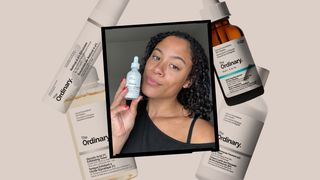
Author: dhfuik

  • Florence Pugh Elevated the Messiest Bun With the Fanciest Scarf — See Photos

    Florence Pugh Elevated the Messiest Bun With the Fanciest Scarf — See Photos

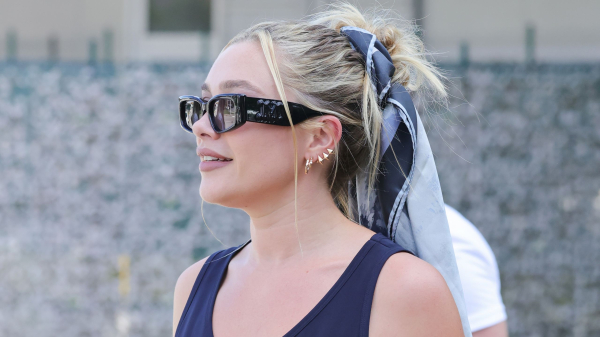
    Florence Pugh wearing a scarf around her messy bunPhoto: Getty ImagesSave StorySave this storySave StorySave this story

    It’s not fair. My messy bun looks like I slept in it (probably because I did), but Florence Pugh’s messy bun looks like it hired its own creative director. Thankfully, I can pretty much pinpoint and poach exactly what takes her hair from afterthought to elegant: a silk scarf—arguably the hair accessory of the year.

    Spotted at the Venice Film Festival, Pugh wore her hair in an imperfect updo that looks, at first glance, like she might have twisted it up without bothering to locate a brush. Rather than smoothing her hair into submission, Pugh’s crown has visible bumps and irregularities. Wispy ends escape the bun in multiple directions, including in front of the knot, while a couple of loose tendrils fall around her face.

    By no means is this the sort of messy bun you achieve by spending 45 minutes carefully engineering the appearance of having spent 45 seconds on your hair. It’s absolutely an “I put my hair up because it was annoying me” bun—but then the scarf changes the equation.

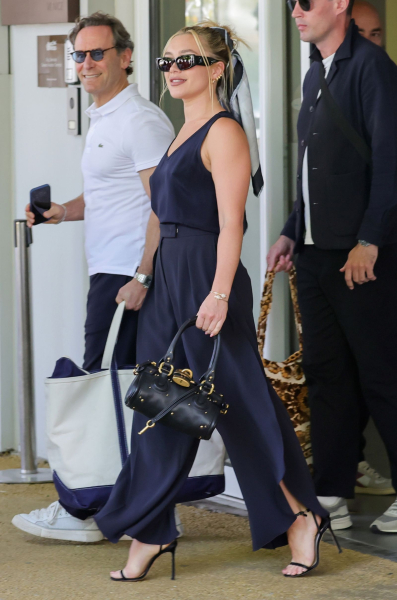
    Florence Pugh wearing a navy jumpsuitPhoto: Getty Images

    The long, silky swathe is tied around the base of the bun, with the ends pulled down the back. Because of its placement and length, it almost reads as a printed ponytail at first glance. I haven’t been able to figure out the scarf’s designer as of writing this, but even if it’s a nearly priceless Pucci or an impossible-to-find Chanel piece, it’s the concept of the look that we can all copy. The charm is in the contrast, not the cost.

    The rest of Pugh's look is both relaxed and refined, just like her hair. She wore a sleeveless, navy jumpsuit with a defined waist, strappy stiletto sandals, chunky Max Mara sunglasses—polished enough for Venice but unfussy enough that the bun fits right in with the overall vibes.

    Turns out that the fine line between “I couldn't be bothered” and “I couldn’t possibly let myself be seen as anything short of stylish” is apparently several inches of silk.

  • Anne Hathaway’s Matchy-Matchy Red Lips and Nails Are Fall’s Most Glamorous Trend—See the Photos

    Anne Hathaway’s Matchy-Matchy Red Lips and Nails Are Fall’s Most Glamorous Trend—See the Photos

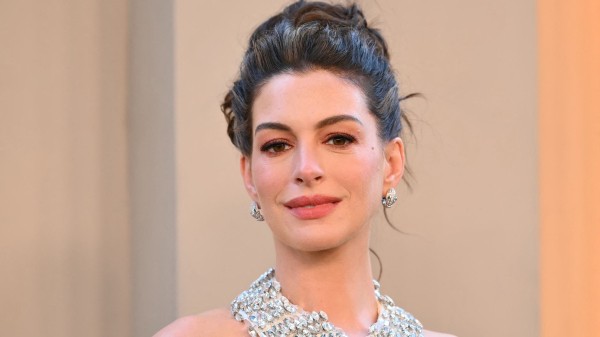
    Anne Hathaway poses in a glittering gown and updo.Getty ImagesSave StorySave this storySave StorySave this story

    I used to wear matte red lipstick every. single. day. of my life. I was never without a tube of MAC Ruby Woo, but in recent years, I've ditched the crimson lip in favor of something more subtle, like—gasp!—a gloss. But the latest pics of Anne Hathaway have me revisiting my favorite reds once more, especially when paired with a matchy-matchy red manicure and pedicure.

    Maybe Hathaway knew I was craving a return to old-school glamour after a laid-back, low-key summer, because the Oscar winner showed up to the Bvlgari Serpenti Infinto Exhibit Event in New York City wearing the ultimate fancy-lady combo on her lips and tips: bright, bold bombshell red.

    Let's start with her lipstick. Hathaway chose a classic vivid red hue with a slight cool undertone, pairing it with a delicate flush of pale pinky-peach blush and a subtly defined eye. We don't know the exact lipstick she wore (though Anne, please share if you read this!), but given that she frequently works with makeup artists Hung Vanngo and Gucci Westman, both of whom have their own makeup lines, it could be Vanngo's New York Red or Westman Atelier's matte Pip. (She's previously shared that she carries one of Westman's in her bag.) Hathaway is a longtime red lipstick fan; she's been wearing the shade for red carpets for decades now and it's definitely a signature for the star.

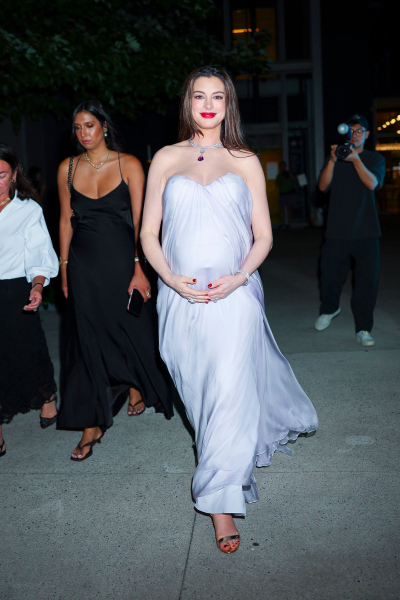
    Anne Hathaway wears a silverblue gown and red lipstick and nails.Getty Images

    It was the matching red nails (and even red toes!) that really brought the look home, serving as a gorgeous contrast against her pale blue-gray strapless Alexander McQueen gown. Celebs have been devoted to French manicures and milky nails for so long now that when we see a bright red nail on the red carpet, it feels like a pleasant surprise. Hathaway's nails were filed short and painted a gorgeous, creamy crimson red similar to her lipstick. Essie's Not Red-y for Bed would give you a similar look. And if you'd rather match your nails to your jewelry, follow Taraji P. Henson's lead! The actor just went for a gilded vibe that we can't stop thinking about.

    Fall often signals a return to bolder beauty looks, and we spotlighted bright lips as one of our favorite trends of the season. There's never been a better time to bring your red lipstick out of retirement and take it out on the town!

  • Rodial Soft Focus Glow Drops Review

    Rodial Soft Focus Glow Drops Review

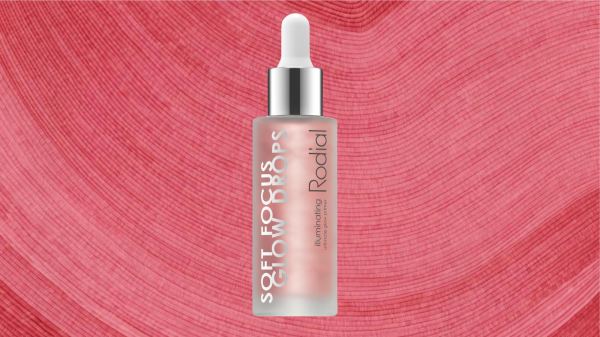
    Image may contain Bottle Cosmetics Perfume and Lotion$90 at RodialSave StorySave this storySave StorySave this story

    TL;DR:

    • What it is: The reason primer gets promoted from “optional” to “non-negotiable” in your makeup routine
    • What it does: Preps skin for makeup while adding a soft-focus glow that makes foundation’s job a whole lot easier
    • Who it’s for: Anyone who wants their makeup to look better before they even put it on

    Primer is supposed to be a behind-the-scenes player. It preps, smooths, helps your makeup look better—and then disappears underneath everything else. Rodial Soft Focus Glow Drops apparently did not get that memo.

    Yes, this lightweight liquid—made with glycerin, squalane, and mica—does all the things I want from a primer (hydrate, grip, and give a little bit of glow), but what really got my attention was how it made my skin look before I even started on foundation.

    A few drops tagged on at the end of my skin-care routine create this soft-focus, illuminated finish that reminds me of walking around as if very flattering lighting were following me everywhere. My skin also looks noticeably glowier, without obvious sparkle or shimmer.

    And sure, foundation looks gorgeous layered over it. But lately, I’m just as likely to add a little concealer where I need it and leave the rest alone. Why cover up the main event?

    Rodial Soft Focus Glow Drops are in the September Allure Beauty Box.

    GET THE BOXRodial Soft Focus Glow Drops

    Rodial Soft Focus Glow Drops

    $90 at Rodial$90 at Rodial

  • 6 Best At-Home Teeth-Whitening Kits for a Brighter Smile

    6 Best At-Home Teeth-Whitening Kits for a Brighter Smile

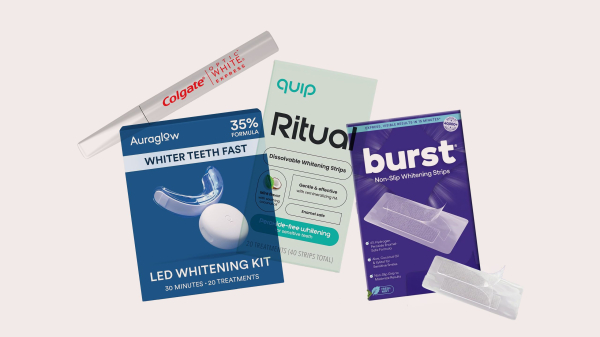
    A collage of Colgate Auraglow Quip and Burst teethwhitening strips and pens on a light gray backgroundCollage: Jemeria Davison; Source images: Courtesy of brandsSave StorySave this storySave StorySave this story

    Ideally, brushing your teeth every day would be enough to keep them pearly white. But for those with stubborn stains, the best at-home teeth-whitening kits can help you maintain a bright smile in between dentist visits. While a good whitening toothpaste can work to keep stains away on a day-to-day basis, these more potent kits typically use strips, trays, or a pen to deliver their whitening agents—usually hydrogen peroxide or carbamide peroxide—to your teeth. These ingredients come in lower concentrations than you’d get with in-office treatments, but they can still have noticeable results.

    Just remember to keep your expectations realistic. “What’s important to understand is that whitening simply lifts stains from your teeth to bring your teeth back to their natural color,” says Sharon Huang, DDS, a cosmetic dentist in New York City. “It doesn’t make teeth look artificially white or opaque.” A good at-home teeth whitener won’t give you a mouthful of Chiclets, but it will brighten up your smile—and even remove the evidence of your cold brew habit.

    Our Top At-Home Whitening Kits

    • Best Whitening Strips: Crest 3D Whitestrips, $46
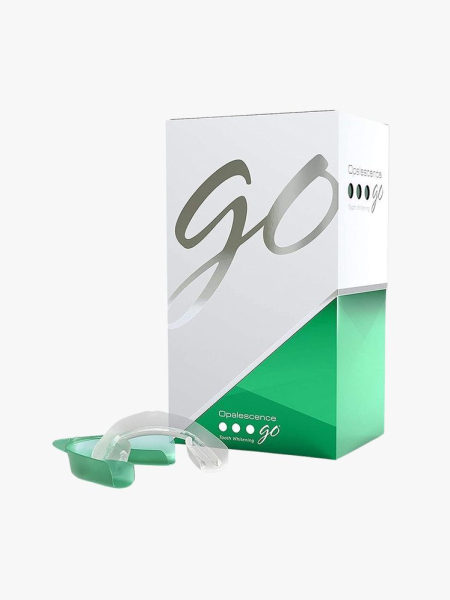
    • Best Whitening Trays: Opalescence Go Whitening Trays, $84
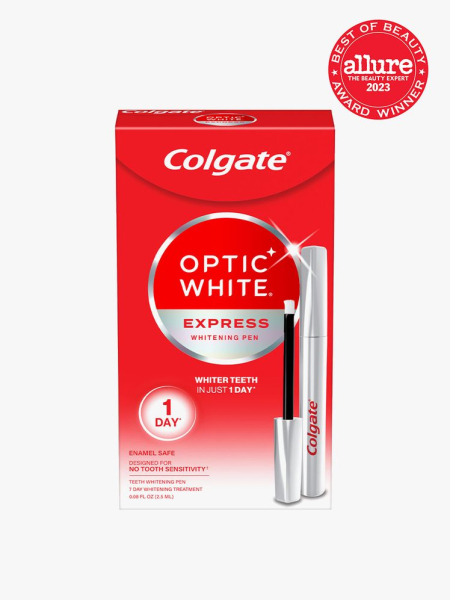
    • Best Whitening Pen: Colgate Optic White Express Teeth Whitening Pen, $26
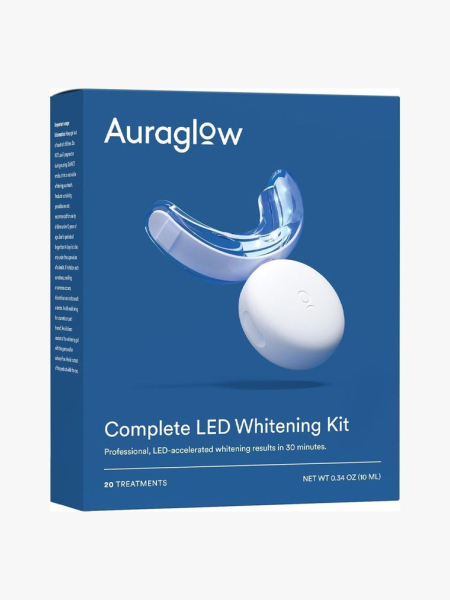
    • Best LED Device: Auraglow Teeth Whitening Kit, $48
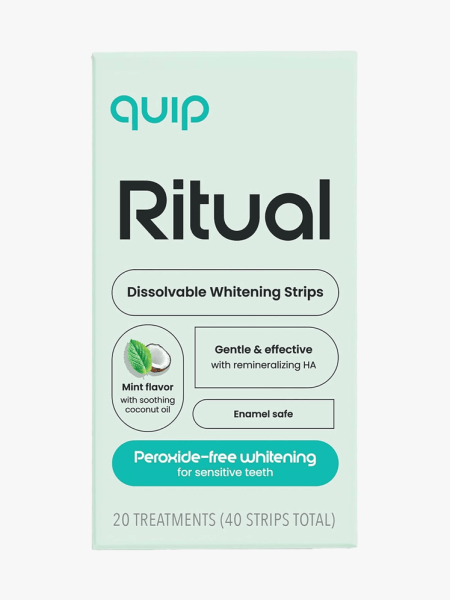
    • Best for Sensitive Teeth: Quip Ritual Dissolvable Teeth Whitening Strips, $40
    • Best Flavored: Burst Non-Slip Whitening Strips, $20

    Frequently Asked QuestionsAccordionItemContainerButtonLargeChevron

    • How do you remove stains from teeth?
    • How do teeth-whitening ingredients work?
    • What are the differences between in-office whitening and over-the-counter whitening treatments?
    • Any other considerations while shopping for teeth-whitening products?
    • Am I a good candidate for over-the-counter teeth-whitening products?
    • Can yellow teeth actually be whitened?
    • What are the downsides of teeth whitening?
    • Meet the experts
    • How we test and review products
    • Our staff and testers

    Ready for a brighter smile? Check out the best teeth-whitening kits, as selected by experts and editors, below.

    Best Whitening Strips: Crest 3D Whitestrips Professional Effects

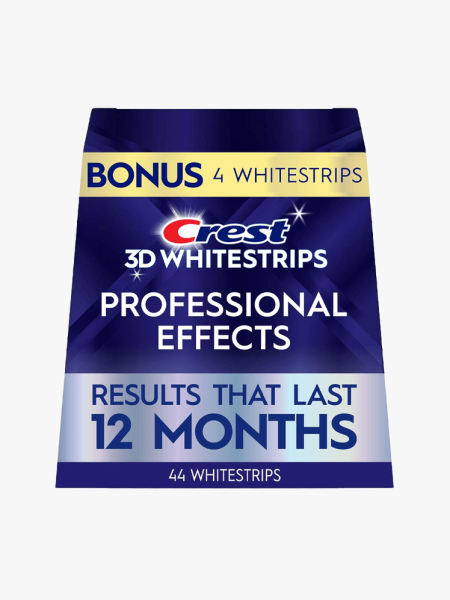
    Crest 3D Whitestrips Professional Effects in branded component on a light gray backgroundSave to wishlistSave to wishlist

    Crest

    3D Whitestrips Professional Effects

    $46

    Amazon

    Why we love it: There's no doubt that Crest Whitestrips are one of the most recognizable over-the-counter teeth-whitening systems available. It seems as if they've been around forever, but professionals (and Allure Best of Beauty Award testers) still love them. "Over the counter, I recommend Crest 3D Whitestrips," says Neil Hadaegh, DDS, a board-certified cosmetic and restorative dentist in Beverly Hills, California. "A lot of my patients who naturally have whiter teeth or slightly discolored teeth are happy with the results," Dr. Hadaegh notes.

    Giri Palani, DDS, a board-certified dentist in Beverly Hills and Palos Verdes, California, is also a fan of Crest’s teeth-whitening strips. "When people use strips properly, they can get very close to professional whitening," he says. One Best of Beauty tester found that was absolutely the case: With regular use (45 minutes a day for 20 days), these strips tackled years of drinking multiple coffees every day. To top it off, they didn’t aggravate her sensitive teeth.

    More to know

    AccordionItemContainerButtonLargeChevron

    • Key ingredients: hydrogen peroxide

    Best Whitening Trays: Opalescence Go Whitening Trays

    Opalescence Go Whitening Trays white and green box on light grey backgroundSave to wishlistSave to wishlist

    Opalescence

    Go Whitening Trays

    $84

    Amazon

    Why we love it: Opalescence Go Whitening Trays are a crowd favorite among the cosmetic dentists we spoke to. They come in 10% or 15% hydrogen peroxide concentrations, and they even have flavor options: You can choose between refreshing Mint or Melon. "The whitening gel is dense and stays put while you wear the tray, which means less whitening gel [goes] on your tongue or down your throat," says Chrystle Cu, DDS, a board-certified dentist in San Mateo, California, and Cocofloss founder.

    Meanwhile, Clement Kairouz, DDS, a cosmetic dentist based in New York and Dubai, likes these pre-filled trays for their user-friendly design and added ingredients. “The trays soften with body heat and mold to your teeth, so coverage is even instead of gapping, as a flat strip does,” he says. “They’ve also got potassium nitrate and fluoride built in, managing sensitivity and strengthening enamel while you whiten—most drugstore kits skip that.” Marina Gonchar, DMD, a board-certified dentist at Skin to Smile in Morristown, New Jersey, also gives Opalescence her stamp of approval, but recommends proceeding with caution: The higher-concentration formula delivers major results, but can increase tooth sensitivity with prolonged use, she says.

    More to know

    AccordionItemContainerButtonLargeChevron

    • Key ingredients: hydrogen peroxide

    Best Whitening Pen: Colgate Optic White Express Teeth Whitening Pen

    Colgate Optic White Express Teeth Whitening Pen red box on light gray background with red Allure Best of Beauty seal in the top right cornerSave to wishlistSave to wishlist

    Colgate

    Optic White Express Teeth Whitening Pen

    $26

    Amazon

    $22

    Walmart

    Why we love it: Our testers for the 2023 Best of Beauty Awards called Colgate’s Optic White Express Teeth Whitening Pen “the holy grail of teeth whitening," and for good reason: It's effective, fast, and easy to use. This ultra-portable pen contains 35 treatments, which rely on a simple formula consisting of alcohol solvent, copolymer, hydrogen peroxide, and water. Even better? It works its whitening magic within an hour: All you have to do is stay away from food during that time (but you can still drink water!), then brush off the dried film with water. For best results, Colgate recommends using the pen for a week, with three applications on the first day and two each day on days two to seven. But, if you're in a pinch, you'll see a noticeable difference in just one day (or three applications), which makes this the perfect pre-event treatment.

    More to know

    AccordionItemContainerButtonLargeChevron

    • Key ingredients: hydrogen peroxide

    Best LED Device: Auraglow Teeth Whitening Kit

    Auraglow Teeth Whitening Kit in branded component on a light gray backgroundSave to wishlistSave to wishlist

    AuraGlow

    Teeth Whitening Kit

    $48

    Amazon

    $48

    Walmart

    Why we love it: LED devices speed up the whitening process by pairing a time-tested whitening agent with LED light, which supposedly helps activate the agent. Pia Lieb, DDS, a board-certified cosmetic dentist based in New York City, recommends the AuraGlow Teeth Whitening Kit, noting that it's highly effective and more affordable than other LED whiteners out there. "This whitening solution comes with trays and an LED mouthpiece to comfortably whiten both your top and bottom teeth," Dr. Lieb says. "It also features 35% carbamide peroxide (most dental offices use a 40% peroxide formula), which is a testament to the great results this product produces." You should see improvements after one or two 30-minute sessions. After a week, your teeth should look 10 shades whiter, according to Auraglow.

    More to know

    AccordionItemContainerButtonLargeChevron

    • Key ingredients: carbamide peroxide

    Best for Sensitive Teeth: Quip Ritual Dissolvable Teeth Whitening Strips

    Quip Ritual Dissolvable Teeth Whitening Strips in branded component on a light gray backgroundSave to wishlistSave to wishlist

    Quip

    Ritual Dissolvable Teeth Whitening Strips

    $40 $30 (25% off)

    Amazon

    Why we love it: Quip’s Ritual Dissolvable Teeth Whitening Strips are a great alternative for people with teeth so sensitive that they can’t tolerate peroxide-based whiteners. Dr. Huang says this kit “takes a more thoughtful approach to whitening” by using hydroxyapatite to strengthen tooth enamel and pentasodium triphosphate and phthalimidoperoxycaproic acid (a.k.a. PAP) to break down stains. Compared to hydrogen peroxide, PAP is gentler, but similarly effective at removing stains (though research suggests that hydrogen peroxide is the better option for addressing deep discoloration). The strips also contain coconut oil to nourish and soothe your gums, so you get a brightness boost in the short term and healthier gums over time. “It’s also incredibly easy to use,” Dr. Huang says. “Just lick, stick, and the strip dissolves in 15 minutes.”

    More to know

    AccordionItemContainerButtonLargeChevron

    • Key ingredients: phthalimidoperoxycaproic acid, pentasodium triphosphate

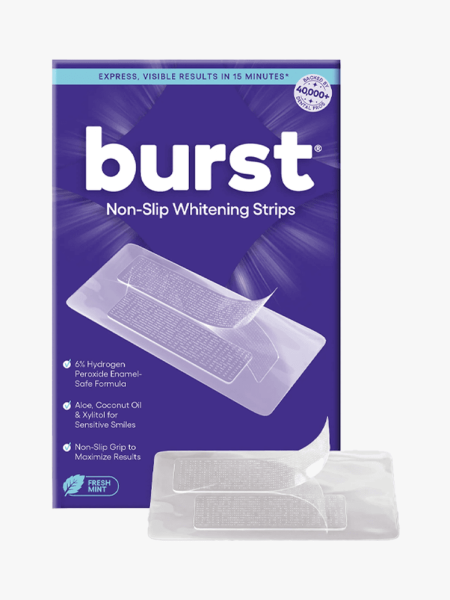
    Best Flavored: Burst Non-Slip Whitening Strips

    Burst Non-Slip Whitening Strips in branded component on a light gray backgroundSave to wishlistSave to wishlist

    Burst

    Non-Slip Whitening Strips

    $20

    Amazon

    Why we love it: Burst’s Non-Slip Whitening Strips add a little zip to your dental routine with two fresh flavor options: mint and watermelon. Whichever option floats your boat, you’ll see improvements after your first 15-minute session (although you’ll get the max results if you use them every day for a week). In addition to hydrogen peroxide, these strips contain xylitol, which boosts saliva flow and neutralizes the acids in your mouth that can break down your enamel. As a result, these strips shouldn’t cause as much lingering sensitivity as other peroxide-based whiteners. Plus, they hug your teeth tightly to ensure even, thorough application over the surface of your teeth and to prevent them from slipping down. These strips are also formulated with soothing aloe and coconut oil, which may make them a good option for sensitive, inflammation-prone gums, according to Dr. Huang.

    More to know

    AccordionItemContainerButtonLargeChevron

    • Key ingredients: hydrogen peroxide

    Frequently Asked Questions

    How do you remove stains from teeth?

    "Tooth enamel [is] a crystal," Matthew J. Messina, DDS, a board-certified, Ohio-based dentist, and spokesperson for the American Dental Association (ADA), says. "If you were to look at tooth enamel under a really powerful microscope, [the structure] kind of looks like chicken wire" (or wire mesh). He explains that removing stains within the matrix of the tooth enamel is like getting out dirt stuck in chicken wire: "So what happens in whitening is we want to…open the matrix and bubble out that color, the stain, and then close it back up." That's where peroxide comes in.

    How do teeth-whitening ingredients work?

    Dr. Messina says peroxide causes the color bubbling to occur, so the active ingredient in whitening kits you buy will be hydrogen peroxide or carbamide peroxide (a diluted version of hydrogen peroxide). "Carbamide peroxide is used because it's a comparatively stable compound," Dr. Hadaegh says. "This helps the manufacturer to ensure product quality and consistency at the consumer’s end." Dr. Messina notes that aside from the peroxide, over-the-counter whitening products usually contain some additional ingredients to improve the taste.

    What are the differences between in-office whitening and over-the-counter whitening treatments?

    Peroxide is the main active ingredient in the products dentists use to do in-office whitening in their offices, too. The only difference is the concentration. "If we're doing something where we can mask off the gum tissue…where the gum tissues are protected, we can use a stronger whitening agent…because it's only touching the teeth," Dr. Messina says. "Something you're using over the counter has the potential to touch the gum tissues or be swallowed. So, we have to use a much lower strength of the active ingredient because…it might burn [the patient's] gum tissues."

    Dentists carrying out professional treatments, on the other hand, "can take all the necessary precautions to make sure the gum tissue is safe and protected and the whitening agent is only getting on the tooth enamel that we want whiter." Ultimately, Dr. Messina says that all over-the-counter, peroxide-based whiteners will deliver comparable results as long as you follow the manufacturer's instructions for use. He says you can use it for 7 to 10 days to start, and then once every other week or so for maintenance.

    Any other considerations while shopping for teeth-whitening products?

    The most important thing to look for when you're shopping is ease of use, Dr. Palani says. "Also, you want to make sure that the product you buy has a good shelf life and store the product properly in the refrigerator to last longer," Dr. Palani adds.

    Am I a good candidate for over-the-counter teeth-whitening products?

    Consider taking a trip to the dentist for your standard teeth cleaning and consulting with them on your at-home whitening plans. "Tooth whitening is something that should only be done in a healthy mouth situation," he says. "If somebody has cavities or periodontal disease, or some other reason why their teeth aren't white, whitening is not the right choice for them—that's why it's always good to have a thorough examination done by your dentist before starting a whitening program."

    Another benefit? If you use at-home whitening products after a dentist cleaning, Dr. Messina says you'll be whitening the tooth enamel rather than the tartar or buildup on top of it—so you'll achieve better results. Regardless, involving your dentist in the discussion is always a good idea.

    Can yellow teeth actually be whitened?

    Yellowing teeth are usually due to stains from coffee, tea, or wine, or a side effect of aging, Dr. Huang says. Luckily, these root causes “respond very well to whitening,” she says. Dr. Kairouz agrees with this, adding that graying teeth or teeth with banded staining (meaning horizontal stains that are embedded in the tooth) is a different story. These issues stem from antibiotics use or trauma to the teeth, and are much more difficult to address. Deeper, more stubborn yellow stains or discoloration are also better off being treated at your dentist’s office, Dr. Huang says.

    What are the downsides of teeth whitening?

    At-home whitening can increase your tooth sensitivity and irritate your gums, Dr. Huang says. It can also exacerbate existing issues, “like exposed roots or [gum] recession, which is why I always recommend making sure your teeth and gums are healthy before starting,” she says. Overuse can add to that sensitizing effect by thinning the enamel on your teeth, Dr. Kairouz notes. It can even “leave teeth looking grayer at the edges instead of brighter,” he adds. After you complete one course of your whitening kit, take a break for a week or two before considering starting another, as Dr. Messina recommended above.

    It’s also important to note that teeth whiteners won’t have any effect on veneers, bonding, crowns, or fillings. “Whitening must be done with your current dental work in mind or be part of your new design,” Dr. Huang says.

    Meet the experts

    • Chrystle Cu, DDS, a board-certified dentist in San Mateo, California, and Cocofloss founder
    • Marina Gonchar, DMD, board-certified dentist based in Morristown, New Jersey
    • Neil Hadaegh, DDS, board-certified cosmetic and restorative dentist in Beverly Hills, California
    • Sharon Huang, DDS, founder of Les Belles NYC Dentistry in New York City
    • Clement Kairouz, DDS, cosmetic dentist based in New York and Dubai
    • Pia Lieb, DDS, board-certified cosmetic dentist based in New York City
    • Matthew J. Messina, DDS, board-certified dentist in Ohio
    • Giri Palani, DDS, board-certified dentist in Beverly Hills and Palos Verdes, California

    How we test and review products

    When Allure tests a product, our editors look at it from every angle in an effort to best serve you. We review ingredients, scrutinize brand claims, and, when necessary, examine peer-reviewed scientific and medical studies. In addition to testing each and every product that's included in each and every review, we rely on experts who shape their fields, including dermatology, cosmetic chemistry, and medicine, to help us vet the ingredients and formulas.

    For our list of the best at-home teeth-whitening products, we considered each product's performance across five primary categories: product ingredients and efficacy, packaging, ingredients, safety, and results. Every product was determined to have excelled in each category by our editorial team, which is composed of in-house writers and editors as well as contributors—along with special consideration from dentists. To learn more information on our reporting and testing processes, read our complete reviews process and methodology page.

    Our staff and testers

    A beauty product is a personal purchase. You might be searching for a face cream to address persistent dryness or a new nail product to add to your Sunday self-care routine; you may simply be browsing around for the latest launches to hit the hair market. No matter what you seek or your individual needs and concerns, Allure wants to ensure that you love anything we recommend in our stories. We believe that having a diverse team of writers and editors—in addition to the wide range of outside testers and industry experts we regularly call upon—is essential to reaching that goal.

    After all, can we really say a skin-care product is the "best" for people over 50 if the only testers we've solicited opinions from folks who have yet to hit 30? Can we honestly deem a high-end diffuser worthy of your hard-earned cash if it's never been tested on curls? We're proud that our staff spans a wide range of ages, skin tones, hair textures, genders, and backgrounds, which means that we are able to fairly assess any beauty product that comes into the beauty closet.

  • Why the French Manicure Has Divided People For Decades

    Why the French Manicure Has Divided People For Decades

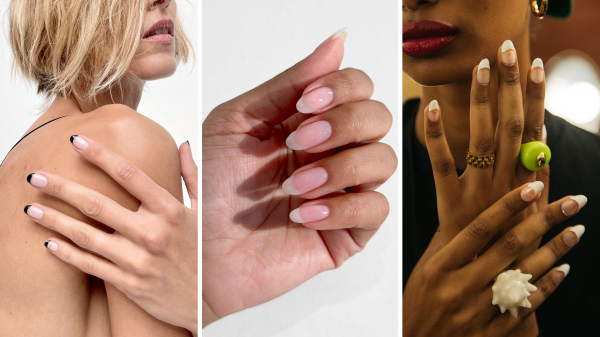
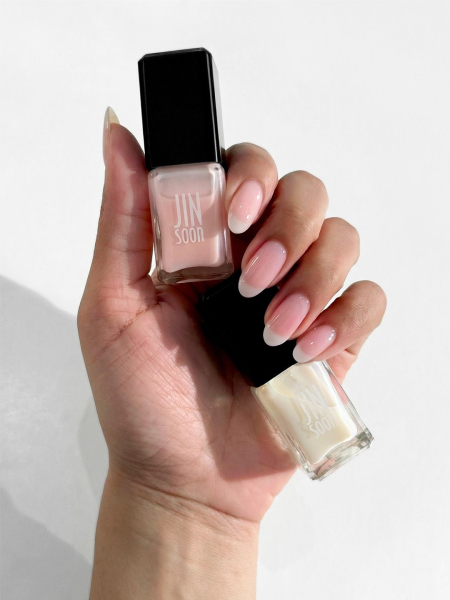
    Image may contain Body Part Hand Nail Person Finger and ManicureMegan Cencula; Courtesy of JINsoonSave StorySave this storySave StorySave this story

    I was 13 when my mom dropped me off for my first manicure at my local New Jersey nail salon, sandwiched between a pizza parlor and a Tiger Schulmann’s. My end-of-the-year eighth grade dance was on the horizon, you see, and I wanted to do something tangible to honor my budding womanhood (or, at least, my entrance into high school). The year was 2010, and the most grown-up nail style I could think of was a French manicure, the same one I saw painted on the hands of both glamorous celebrities and fictional characters, like Jennifer Lopez and Elle Woods. The opaque pink base with a bright white polish slashed across the tips was the epitome of femininity, class, and style—until it wasn’t. But more on that later.

    The French manicure, in all of its Y2K glory, was introduced to the world pre-millennium. It was 1976 when Jeff Pink, the founder of Orly, is credited with creating it. He’s told the origin story many times before, and he repeated it to me over the phone this past August in honor of the French manicure’s 50th anniversary.

    It goes something like this: In the 1970s, Pink owned a beauty supply store that serviced a number of Hollywood studios. He sold beauty products across categories like hair products, makeup, and of course, nail polish to television and movie sets. One day, a director complained that he was spending too much time changing each actress’ nail colors to match their outfits, and asked if Pink could come up with a style that would go with everything. “In the office, I had a white pencil that women used to use to clean underneath the nail, so that gave me the idea to come up with a white nail polish [tip],” Pink says. “At the time, I couldn't get white nail polish because it didn't exist. I had to fight with [a] company to make me one gallon of white polish, and finally they did.”

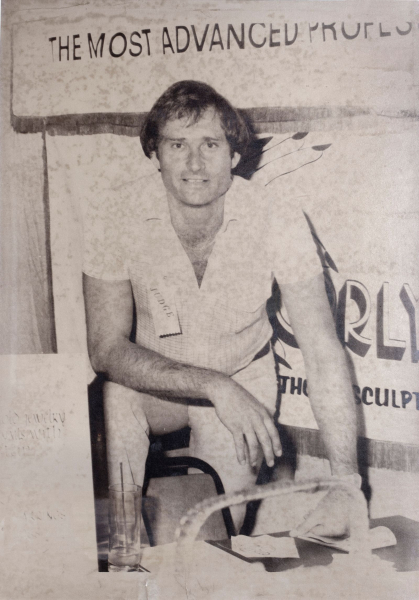
    Image may contain Face Head Person Photography Portrait Furniture Cup and Chair

    Jeff Pink, founder of Orly and creator of the French manicure, in 1979.

    Courtesy of Orly

    Pink’s neutral manicure was designed to look like an exaggerated version of the natural nail. Luckily, the director was pleased. “He got so excited and he told me, Jeff, one day you should win an Oscar because you saved the industry so much money,” he says. “I'm still waiting for that.”

    In 1976, after his on-screen invention, Pink’s company immediately started producing the style as a kit called the “Natural Nail Look,” et voilà, the French manicure. Although, it would be a few years until it was called the French manicure, and until the look really caught on with the common nail lover.

    The turning point came in 1978, when Pink had the opportunity to demonstrate how to achieve his “Natural Nail Look” at Paris Fashion Week, and was suddenly struck with inspiration in the City of Love. “On the way back from Paris to L.A., I said to myself, Jeff, you know what? Natural Nail Look is really kind of cheesy. Maybe you should come up with some other name,” he says. “And then the idea came to me. I just came from Paris. Let's call it French manicure.” And then the French manicure was born.

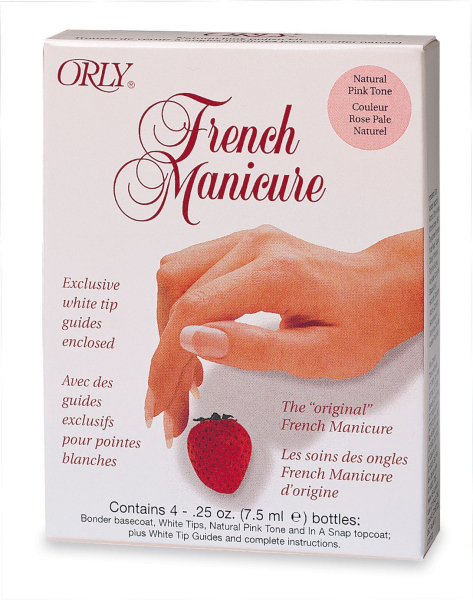
    Image may contain Berry Food Fruit Plant Produce Raspberry Business Card Paper and Text

    Orly’s “original” French manicure kit.

    Courtesy of Orly

    “[Orly] was really pushing the versatility component, which was important to women of the 1970s,” says Suzanne E. Shapiro, nail historian and author of Nails: The Story of the Modern Manicure. “It was a look that you could wear from the office to your social life that matched any number of changes of clothing would've been hugely appealing at that era.” The style also gained resonance at the time because “it had that look of Hollywood glamour and the almost aggressive femininity was really appealing,” adds Shapiro. She likens the style to dental veneers for the hands—an artificial, exaggerated version of flawlessness that was trendy at the time.

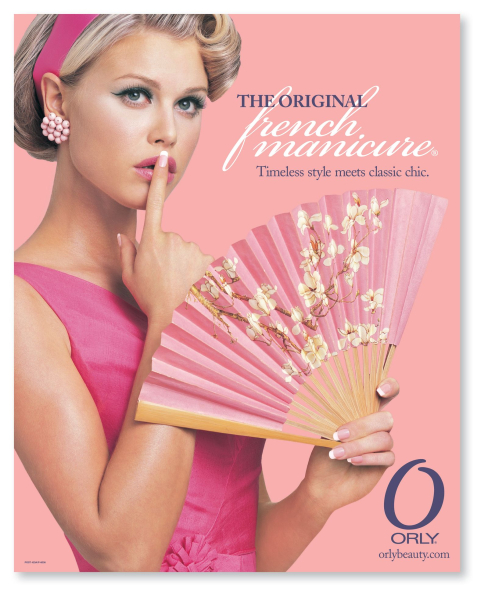
    While Pink may have not gotten an Oscar, he did create one of the most enduring nail styles of all time, so much so that it’s transcended language: Enter any nail salon in the world and you’ll be able to sit down and walk away with the style, communication barrier be damned. (That wasn’t always the case—the manicure style was initially dubbed as an “American thing,” in Europe, but Allure reported in the November 1995 issue that the trend had crossed the pond and become popular among women in France. C’est la vie!) Pink tried to trademark the phrase “French manicure” in 1980, but was blocked—apparently, it was too “well known” for him to be granted ownership of it. Instead, he opted to trademark the phrase “Original French Manicure,” which is still what Orly uses to this day.

    Image may contain Advertisement Adult Person Poster Publication Body Part Finger and Hand

    An “Original French Manicure” Orly advertisement.

    Courtesy of Orly

    What led to the French manicure gaining a permanent spot in the beauty lexicon? Pink believes it was after being seen on the hands of Hollywood starlets and celebrities. He specifically mentions Cher and Barbra Streisand, both of whom allegedly drew attention to their manicures on The Tonight Show With Johnny Carson on two separate occasions. Nail artist Jin Soon Choi, also recalls Streisand and her affinity for the style. She says she remembers it being “glamorous.”

    Throughout the 1990s, the white-tipped style soon became synonymous with the nail salon. “My first nail art I did was a French manicure—a classic French manicure—when I was working at a salon in the beginning of the 1990s in New York City,” says Choi. “I thought that was the only nail art that existed. People did either a sheer color, red color, or a French manicure.”

    Tom Bachik, a nail artist who’s crafted French manis on celebrities from Jennifer Lopez to Selena Gomez, had a similar experience. “The Nineties was when I started doing nails, so I saw [the French manicure’s] popularity firsthand,” he says. “The bright white tip paired with a pink base was everywhere. It appealed to so many different people because it felt polished and glamorous while still functioning as a neutral.” French tips would go on to be seen on the hands of Jennifer Aniston as Rachel Green in Friends and Elizabeth James in The Parent Trap. Even Princess Diana regularly wore a French mani, both for royal appearances and more casual outings.

    Manicurists started experimenting with the style and more intricate nail art when acrylics started to become more popular. “I remember the transition really happening in the 1990s,” Choi says. Women of color in particular were at the forefront of emerging nail trends and used the French manicure as a jumping off point for artistic expression. In the mid-1990s, Bernadette Thompson, celebrity nail artist and founder of Bernadette Thompson nail line, designed a look for rapper Lil’ Kim based on a French design that incorporated a real $100 bill. “She didn't have any opinion on what she wanted to do, but I gave her a French manicure with money on the tips of her nails,” Thompson says. “Lil’ Kim and Mary J. Blige, there was a time when they wanted French manicures. But I told them, "Listen, you ladies are hip-hop artists and you called me. I'm not doing your typical French manicures.” Thompson’s money manicure made history, too—a reproduction is now on display in the Museum of Modern Art in New York City.

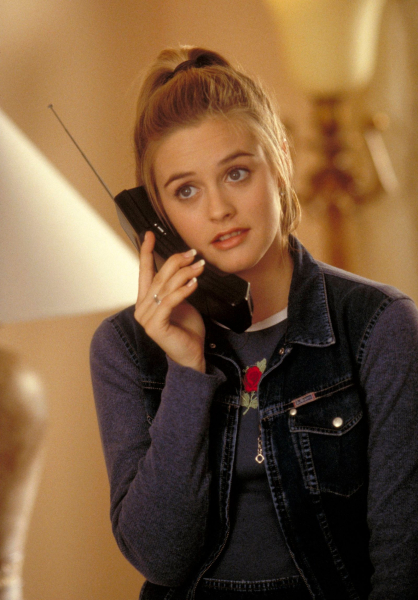
    Image may contain Alicia Silverstone Blonde Hair Person Face Head Photography Portrait Clothing Coat and Jacket

    Cher Horowitz sporting a French manicure in the 1995 movie Clueless.

    CLUELESS, Alicia Silverstone, 1995, (c) Paramount/courtesy Everett Collection

    Acrylics didn’t just allow for decorative nail art designs. They also led to a new version of the classic pink base and white tips. “French manicures had originally been about enhancing the natural nail, but as acrylic nails became more popular, the white tip started becoming wider, brighter, and more of a statement,” remembers Choi. By the late '90s, it was seen on more vivacious characters, like Jennifer Coolidge as Stifler’s mom in American Pie and Elle Woods, Cher Horowitz, and Carmela Soprano. And as we entered Y2K, the look trickled down through salons and ended up on the hands of everyday women—the very same ones who frequented my salons across the country, including my local New Jersey parlor.

    As the French manicure’s popularity grew into the late 2000s and early 2010s, something shifted. The ubiquitous style was no longer très chic, but très gauche. “At that point, the French manicure had become closely associated with one specific look, which was a stark white tip with a bright pink base,” Bachik says. “It had become overexposed. Everyone was wearing it. At the same time, beauty trends were shifting toward cleaner, more minimal nails on one end of the spectrum and more expressive nail art on the other.”

    Maybe it was the manicure’s permanent placement on mob wife Carmela Soprano’s fingernails, or maybe it was the constant appearance on many a Playboy Bunny's hands (Pamela Anderson and Carmen Electra’s lacquered fingertips come to mind) or its frequent appearance at prom nights across the country. Choi specifically remembers that the cast of The Real Housewives of Orange County—Bravo’s first iteration of its Housewives franchise that premiered in 2006—mostly wore long acrylic nails and “a very extreme square shape” with thick white smile lines across the tips. By the 2000s, that exaggerated version became much more common,” she says. “The same basic French manicure had become a completely different look.”

    This, she says, is what really made the style appear “tacky” in some people’s opinion. “[With acrylics] the finish is not as smooth, it's way too thick,” she says. “[People] tried to copy all celebrities that did thick lines." The turn away from deep French manicures also had classist and anti-Black undertones—long acrylic nails and intricate designs had a stigma of being unprofessional when worn on women of color.

    Like many era-defining fashion and beauty trends, some age groups didn’t let it go—which also may be the reason why younger generations were quick to dismiss the style as dated and cheap. “There's always a major faction that clings to the style of their youth, and so it starts looking dated,” Shapiro says. “If women of a certain generation are still wearing long, squared-off French manicures, that's probably not going to excite the younger generation and they're going to push back against that.”

    At the time, Allure famously did not hold back on its contempt for the style, and a few hot takes have made it on-the-record: A sidebar in the January 2004 issue says a French mani “has about as much style as French’s mustard,” while former Allure beauty features editor Amy Keller called them “cheap” in the April 2005 issue. The article continued that Keller, “like most beauty editors,” kept her nails short and painted with either a pale nude or a dark red shade. A September 2013 Allure story titled “Men On Manicures” quotes an anonymous man who says a French signals that the wearer is “a woman who spends lots and lots of time on herself.” “French manicures were for porn stars, Jersey girls, or bottle blondes with blue eye shadow,” adds David Denicolo, a longtime contributor and former editor-at-large of our print issue. Back in the day, he polled editors on what they thought of the look for a story. “It was just a snapshot of a moment,” he recalls.

    “The 2010s were a time when you had to fight to get nail art into the magazine,” Sophia Panych, the staff assistant at the time and now content director, previously said of featuring nail art in the print pages of Allure. But as adorned nails became more popular, the pendulum swung back to accepting the French manicure as a bonafide staple. “It was really the focus on nail decoration, and the idea of nails as an art form, that helped steer the conversation away from it being tacky,” she says.

    Image may contain Cosmetics Nail Polish Bottle and Perfume

    Jin Soon Choi’s “invisible” French manicure.

    Courtesy of JINSoon.

    Fast-forward to today, there’s been a shift during the last ten years of the French manicure’s life: It’s had a rebirth. Current Allure staffers no longer agree with their predecessors and celebrities can’t get enough of the style. Nail art didn’t suddenly appear after the second millennium (people were adorning their fingers for thousands of years before glazed donut nails were even a whisper of a thought) but as Panych alluded to, the 2010s nail-art boom paved the way for the French tips to take on new life. “Nail art helped people see the French manicure as a framework rather than one fixed look,” Bachik says. “Once artists began changing the colors, proportions, finishes, and textures, it became clear how versatile the style could be. That versatility is ultimately what brought it back.”

    “It’s a blank canvas for you to be as creative as you want with a clean baseline,” Thompson adds. “It doesn't have to be clean. It doesn't have to be pure. It could be wild, but it’s still the same concept.”

    Choi says she recently created a modern version of the classic style specifically for her client, Zoë Kravitz, that she’s calling the “invisible French.” “She had long nails and wanted an almond shape, and she said, ‘Jin, I want something on my tips,’” the nail artist says. “She's a very natural person, so I put JinSoon Dew on her tips, to make it very clean, and then JinSoon Pixie on top of it.”

    So, what’s next for the enduring style? Fifty more years, and then probably 50 more. “There's no comparison,” says Choi. “The French manicure gets the crown all the way.” When asked his prediction, Pink’s outlook is as rosy as the base color for his on-the-fly invention turned beauty phenomenon. “The French manicure is not just a fashion. It's a style, and style lasts forever,” he says. “The French manicure is going to last forever.”

  • What’s Going On With Your Favorite 2016 Beauty YouTubers?

    What’s Going On With Your Favorite 2016 Beauty YouTubers?

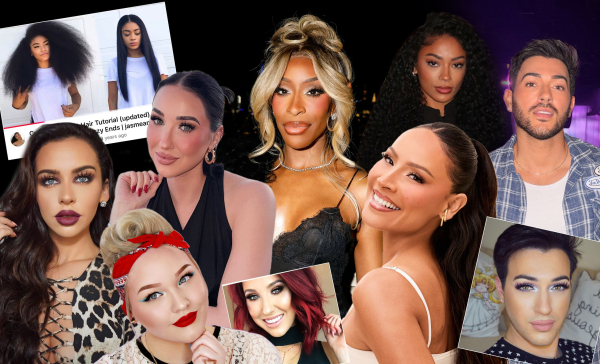
    Image may contain Jaclyn Hill Jaclyn Hill Adult Person Head Face Wedding and HairPhotos: Aina (2016): Getty Images; Bybel: Kiara Gomez; Perkins: Marco Roman; all other: Courtesy of subjectsSave StorySave this storySave StorySave this story

    The year 2016 is widely considered to be beauty YouTube’s Golden Era. Creators were posting 20- to 30-minute long smoky eye tutorials and dramatic transformations, and keeping us fed with drama as well as brutally honest reviews of the latest product drops. A decade later, we’re feeling nostalgic—body shimmer is trending, Anastasia Beverly Hills Dipbrow is back, and we’re slowly moving away from the clean girl aesthetic to embrace pigmented eyeshadow looks again.

    We also seem to be nostalgic for a time when content creation was just a hobby, not one of the more lucrative career paths available to anyone with a ring light. The turn against social media creators seems to have come to a head this summer when a “No Influencers” sign was put up in an antiques and handmade crafts store on Nantucket. The move by the shop owner launched a flurry of online discourse about the tripod-wielding gaggle of usually young, almost always female influencers who parade their phones around in the hopes of building, or nurturing, a gainful following. “People back in the day started creating based off of passion,” Manny Gutierrez, known online as Manny MUA, told Allure. Now, “there's some content creators I watch and I can just see them lying through their teeth.”

    The early days of YouTube sure look nice through a pair of AI-free, unfiltered glasses, huh? It makes sense, then, that many people are gazing back at their favorite early creators—the pioneers that paved the way for the influencers of today to fill our feeds with reviews, tutorials, and product hauls alike—with particular fondness these days. Below, we caught up with some of the most popular beauty vloggers of yore to check in and see how they’re doing, what their plans are for the future, and when (or if) they’ll ever truly retire.

  • 12 Best The Ordinary Products for an Affordable Beauty Routine

    12 Best The Ordinary Products for an Affordable Beauty Routine

    Image contains Allure commerce editorial assistant Hailey Roy with The Ordinary Rice Lipids  Ectoin Microemulsion...Collage: Jemeria Davison; Source images: Courtesy of brandsSave StorySave this storySave StorySave this story

    Few brands have made ingredient lists feel as approachable as The Ordinary. The best Ordinary products skip the smoke and mirrors in favor of names that showcase their active ingredients—Niacinamide 10% + Zinc 1%, Hyaluronic Acid 2% + B5, and Retinal 0.2 Emulsion—so there’s little second-guessing about what you’re applying. That plainspoken transparency is central to its parent company, Deciem (also aptly called “The Abnormal Beauty Company”), which built The Ordinary around understated packaging, familiar ingredients placed front and center, and formulas that often cost no more than lunch.

    Our Top The Ordinary Products

    • HA-ppy Skin: Hyaluronic Acid 2% + B5, $10
    • Set the Tone: Glycolic Acid 7% Exfoliating Toner, $14
    • Smooth Talker: PHA 5% Exfoliating Lip Serum, $9
    • Weightless Wonder: Serum Foundation, $8
    • Pore Power Pair: Niacinamide 10% + Zinc 1% Serum, $6
    • One Step Closer to Smooth: Retinal 0.2 Emulsion, $15

    Since launching 10 years ago, The Ordinary has inspired waitlists, amassed devoted fans, and earned multiple Allure Best of Beauty Awards, proving that inexpensive beauty products don’t have to feel like a compromise. Though skin care remains its bread and butter, the lineup has expanded to include scalp and hair treatments, along with makeup—including its recently revived Serum Foundation. Of course, a catalog filled with percentages, peptides, acids, suspensions, and microemulsions can still require a bit of decoding. Ahead, we rounded up the brand’s greatest hits—what they actually do, how to use them, and which ones deserve real estate in your routine.

    Frequently Asked QuestionsAccordionItemContainerButtonLargeChevron

    • Meet the experts
    • How we test and review products
    • Our staff and testers

    HA-ppy Skin: Hyaluronic Acid 2% + B5
    The Ordinary Hyaluronic Acid 2% + B5 in white branded dropper component on a light gray backgroundSave to wishlistSave to wishlist

    The Ordinary

    Hyaluronic Acid 2% + B5

    $10

    Amazon

    $10

    Nordstrom

    $10

    Ulta Beauty

    Allure senior staff writer Elizabeth Gulino applying The Ordinary Hyaluronic Acid 2% + B5

    Elizabeth Gulino

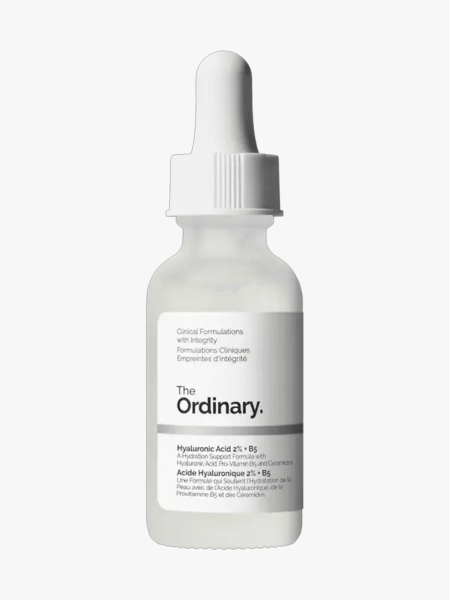
    Why we love it: Long before TV commercials were teaching us how to pronounce “hyaluronic,” The Ordinary’s Hyaluronic Acid 2% + B5 was part of the brand’s original 2016 lineup. What separates it from many basic HA serums is its 2% concentration of five forms of hyaluronic acid, including hydrolyzed hyaluronic acid and sodium hyaluronate crosspolymer, which work across multiple levels of the skin’s surface to draw in water, soften fine lines, and give skin a plumper appearance. Panthenol, a.k.a. pro-vitamin B5, supports moisture retention, while phospholipids sgand sphingolipids reinforce the skin barrier. Glycerin supplies another dose of humectant hydration, and red algae extract helps condition skin.

    Tester feedback from senior staff writer Elizabeth Gulino

    AccordionItemContainerButtonLargeChevron

    “I’ve been using The Ordinary’s reformulated Hyaluronic Acid 2% + B5 serum (with ceramides) for years and don’t plan on stopping. I first picked it up because of its approachable price point, but I’ve become a repeat customer thanks to the product doing its job by keeping my skin soft and hydrated. I use it year-round, and it layers wonderfully under moisturizer.” —Elizabeth Gulino, senior staff writer

    More to know

    AccordionItemContainerButtonLargeChevron

    • Key ingredients: hyaluronic acid, vitamin B5, ceramides, phospholipids, sphingolipids, glycerin, red algae extract
    • Who it's for: people with oily or combination skin who want hydration without the weight
    • Fragrance-free: yes

    Set the Tone: Glycolic Acid 7% Exfoliating Toner
    The Ordinary Glycolic Acid 7% Exfoliating Toner in branded component on a light gray backgroundSave to wishlistSave to wishlist

    The Ordinary

    Glycolic Acid 7% Exfoliating Toner

    $14

    Amazon

    $14

    Nordstrom

    $14

    Sephora

    Allure senior commerce director Shanna Shipin applying The Ordinary Glycolic Acid 7% Exfoliating Toner

    Shanna Shipin

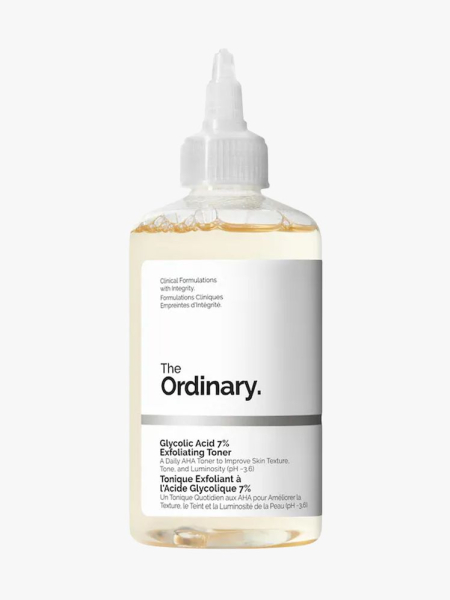
    Why we love it: The Ordinary’s Glycolic Acid 7% Exfoliating Toner lets a single swipe do much of the heavy lifting: Its namesake alpha hydroxy acid loosens dead surface cells to gradually smooth rough texture, brighten dullness, and make uneven tone look more uniform. It can also moonlight as a scalp treatment. “Leaving it on allows the glycolic acid to break down excess scale and absorb excess oils,” says Maya Thosani, MD, a board-certified dermatologist based in Scottsdale, Arizona, who credits the bottle’s precise nozzle for making it especially easy to apply.

    To temper potential irritation, the formula pairs the glycolic acid with aloe and a Tasmanian pepperberry derivative containing polygodial, a plant compound with soothing, anti-inflammatory properties—while antioxidant-rich ginseng provides additional skin-soothing benefits. Although it can be used once daily, glycolic-acid newcomers and sensitive skin types may want to start with two or three evenings a week—whether applying it to the face, scalp, or rough patches below the neck—and work their way up.

    Tester feedback from senior commerce director Shanna Shipin

    AccordionItemContainerButtonLargeChevron

    “This product is like a pharmacy: It fixes everything. I use this to soften the rough skin on my elbows, heal the cracks along the sides of my feet and heels, and tamp down the closed comedones that wreak havoc on my forehead (particularly after I got bangs). It's also worked wonders in lightening my underarms, which has been an uphill battle. I have perpetual dermatitis and eczema, so I love that it's a gentle but effective solution that I haven't managed to overdo—despite being someone who doesn't have a great track record with chemical exfoliants. When I'm especially dry—mostly on my face (it's not the case elsewhere on my body)—it does sting just a bit, but that goes away quickly and hopefully gives way to freshly regenerated skin cells underneath!” —Shanna Shipin, senior commerce director

    More to know

    AccordionItemContainerButtonLargeChevron

    • Key ingredients: 7% glycolic acid, aloe, panax ginseng root extract, Tasmanian pepperberry
    • Who it's for: people with rough, uneven skin
    • Fragrance-free: yes

    Smooth Talker: PHA 5% Exfoliating Lip Serum
    Clear bottle of The Ordinary PHA 5% Exfoliating Lip Serum with white cap on light gray backgroundSave to wishlistSave to wishlist

    The Ordinary

    PHA 5% Exfoliating Lip Serum

    $8

    Amazon

    $9

    Ulta Beauty

    $9

    Sephora

    Allure commerce editor Sarah Han applying The Ordinary PHA 5% Exfoliating Lip Serum

    Sarah Han

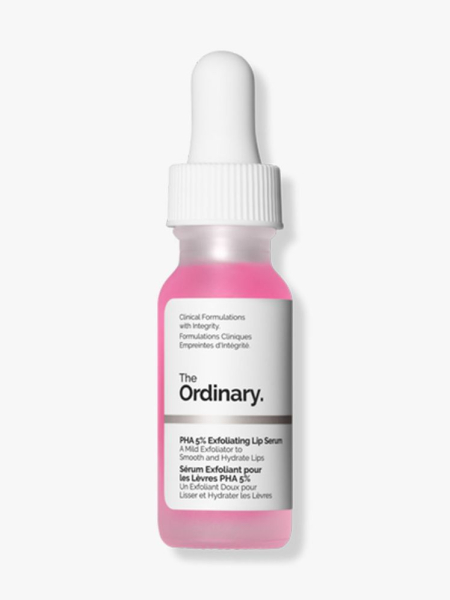
    Why we love it: Physical lip scrubs may be satisfying, but repeatedly sloughing away flakes isn’t always the gentlest strategy. The Ordinary’s PHA 5% Exfoliating Lip Serum takes a less gritty route, using 5% gluconolactone—a polyhydroxy acid with relatively large molecules that work primarily at the surface, keeping it especially gentle—to loosen dead skin without manual scrubbing. A 1.5% blend of citric, malic, and tartaric acids provides additional smoothing, while a glycerin base draws in moisture and ectoin supports the delicate lip barrier. Antioxidant-rich black-carrot extract gives the serum its vibrant pink-to-peach tint, but the color immediately disappears on contact, so don’t expect it to double as a lip stain.

    Tester feedback from commerce editor Sarah Han

    AccordionItemContainerButtonLargeChevron

    “My lips are perpetually dry and textured, and it's a big pet peeve of mine. When I forget to apply a lip mask before bed (which is very often, sigh), I immediately apply a dot of this exfoliating serum all over my lips, and bam, an instantly smooth pout. (Well, I do wait a few minutes for it to fully dry down—it's a bit tacky at first—before applying any actual lip color.) My only qualm? I wish it looked as pink as it does online, but alas, it's nowhere near that hue IRL.” —Sarah Han, commerce editor

    More to know

    AccordionItemContainerButtonLargeChevron

    • Key ingredients: 5% gluconolactone, 1.5% blend of citric, malic, and tartaric acids, glycerin, black-carrot extract
    • Who it’s for: people with rough or dry lips
    • Fragrance-free: yes

    Weightless Wonder: Serum Foundation
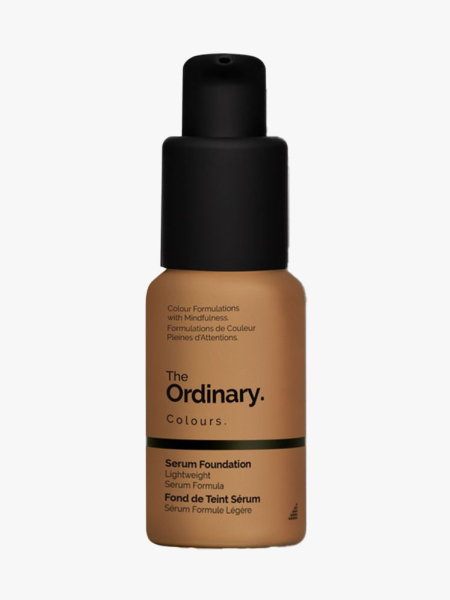
    Bottle of The Ordinary Serum Foundation with black cap on light gray backgroundSave to wishlistSave to wishlist

    The Ordinary

    Serum Foundation

    $8

    The Ordinary

    Allure contributing commerce writer Christa Joanna Lee applying The Ordinary Serum Foundation

    Christa Joanna Lee

    Why we love it: If The Ordinary’s Serum Foundation sounds familiar, that’s because it first made its debut in 2017 as part of The Ordinary Colours collection. After phasing it out in 2022, the brand brought back the original formula last year in response to fans who missed its weightless feel and natural-looking medium coverage. Despite the “Serum Foundation” name, this is not a skin care-makeup hybrid: Serum refers solely to its exceptionally fluid texture, and the brand says the formula contains no active skin-care ingredients. Instead, fast-evaporating silicones help it glide seamlessly across skin before leaving behind a barely-there finish, while coconut alkanes give it a silky slip without making it feel greasy.

    Titanium dioxide and iron oxides supply the pigment—though the former doesn’t make this a substitute for sunscreen—and light-reflecting mica keeps the finish from looking flat. The thin, buildable formula is an especially good fit for anyone who wants to even out discoloration and soften the look of pores without concealing their skin beneath a heavy layer of makeup.
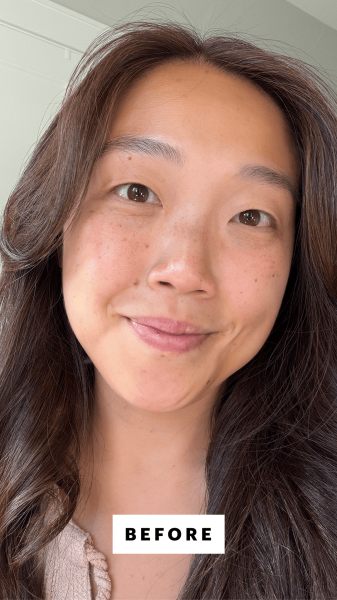
    A selfie of Allure contributing commerce writer Christa Joanna Lee before applying The Ordinary Serum Foundation

    Lee before applying The Ordinary Serum Foundation

    Christa Joanna LeeAllure contributing commerce writer Christa Joanna Lee after applying The Ordinary Serum Foundation
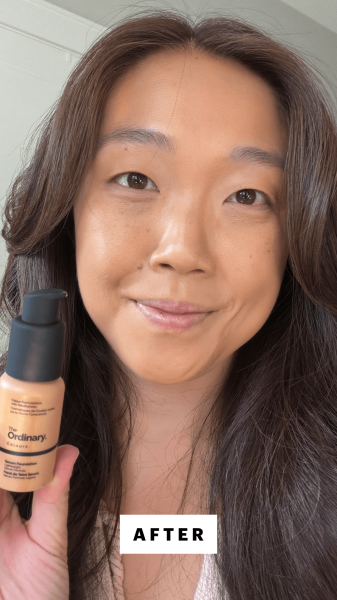
    Lee after applying The Ordinary Serum Foundation

    Christa Joanna Lee

    Tester feedback from contributing commerce writer Christa Joanna Lee

    AccordionItemContainerButtonLargeChevron

    “I’m dealing with quite a bit of new melasma after a summer in the sun—even though I was diligent about sunscreen, I promise—along with easily irritated skin that’s prone to redness. That said, I hate the feeling of wearing makeup; my ultimate test is whether I forget I have it on and nearly go to bed without washing my face. The Ordinary Serum Foundation passes with flying colors. It’s thin, lightweight, and spreads smoothly without looking streaky. Like most serum foundations, it isn’t endlessly buildable, and it doesn’t rely on a lineup of heavy-hitting skin-care ingredients. But as you can see in the video, it gives me just enough coverage to even out my skin tone while still looking and feeling like bare skin.” —Christa Joanna Lee, contributing commerce writer

    More to know

    AccordionItemContainerButtonLargeChevron

    • Key ingredients: silicones, coconut alkanes, titanium dioxide, iron oxides, mica
    • Shades: 36
    • Coverage: medium
    • Finish: natural
    • Who it’s for: everyone, except for those with very dry skin, as it doesn’t have meaningful humectants
    • Fragrance-free: yes

    A Grain of Comfort: Rice Lipids + Ectoin Microemulsion
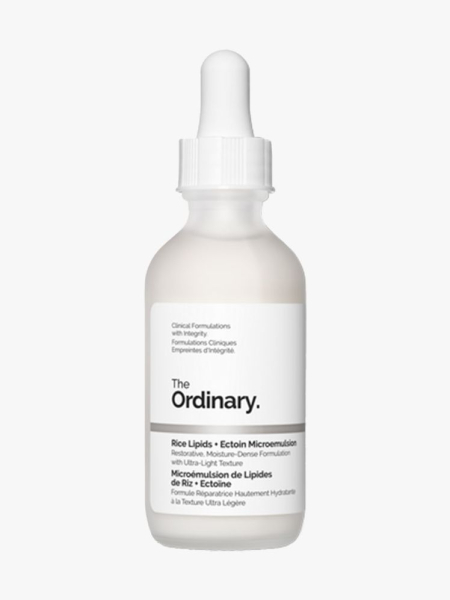
    Bottle of The Ordinary Rice Lipids + Ectoin Microemulsion with white cap and label on light gray backgroundSave to wishlistSave to wishlist

    The Ordinary

    Rice Lipids + Ectoin Microemulsion

    $13

    Amazon

    $13

    Nordstrom

    $13

    Ulta Beauty

    Allure commerce editorial assistant Hailey Roy applying The Ordinary Rice Lipids + Ectoin Microemulsion

    Hailey Roy

    Why we love it: When you want the nourishment of a rich cream without its weight, reach for The Ordinary’s Rice Lipids + Ectoin Microemulsion, which goes beyond the brand’s better-known single-ingredient serums with a more complex approach to hydration. The formula contains both water-based hydrators and nourishing oils, which typically require emulsifiers that can give creams a waxy or heavy feel.

    To keep the two evenly blended without weighing down the texture, The Ordinary instead uses a high-pressure microfluidizer to break the mixture into smaller, more uniform droplets. The result is an unusually fluid lotion that absorbs quickly without leaving a greasy film. Rice lipids and jojoba oil seal in moisture and replenish the skin barrier, while 2% ectoin soothes redness and protects against water loss. Glycerin, sodium hyaluronate, urea, and sodium PCA round out the formula by attracting and holding onto water. It’s an especially good match for dry, dehydrated, or sensitive skin—and our tester, whose skin is perpetually parched, found that just a few drops went a long way.

    Tester feedback from commerce editorial assistant Hailey Roy

    AccordionItemContainerButtonLargeChevron

    “I have dry skin, and despite what some online reviewers may say, this ultra-lightweight serum doesn’t need to be paired with a thicker moisturizer to get the job done. It’s been my go-to all summer for multiple reasons: It's affordable, it’s light enough that it doesn’t weigh down my skin, it moisturizes without feeling greasy, and I only need a few drops in the morning to keep my skin hydrated throughout the entire day. Even with NYC reaching rainforest-adjacent humidity levels recently, this serum never felt heavy or uncomfortable on my skin. I have yet to put it to the test in the winter, when my skin tends to get super dry, but for summer, this serum is just what my skin needs.” —Hailey Roy, commerce editorial assistant

    More to know

    AccordionItemContainerButtonLargeChevron

    • Key ingredients: rice lipids, jojoba oil, 2% ectoin, glycerin, sodium hyaluronate, urea, sodium PCA
    • Who it’s for: people with dry or dehydrated skin
    • Fragrance-free: yes

    More The Ordinary Products We Love:

    Pore Power Pair: Niacinamide 10% + Zinc 1% Serum
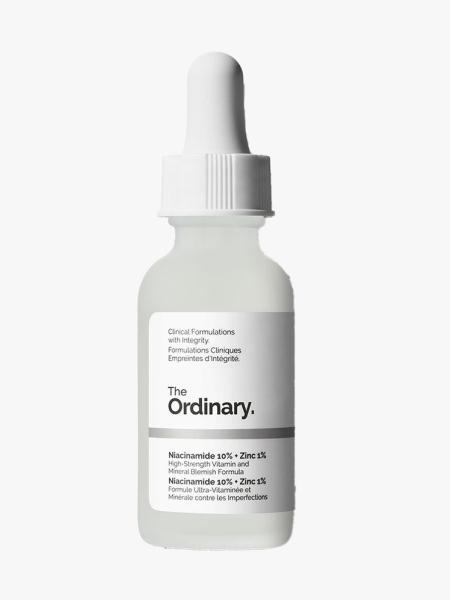
    Bottle of The Ordinary Niacinamide 10% + Zinc 1% Serum with white cap on light gray backgroundSave to wishlistSave to wishlist

    The Ordinary

    Niacinamide 10% + Zinc 1% Serum

    $6

    Amazon

    $6

    Nordstrom

    $6

    Ulta Beauty

    Why we love it: The Ordinary’s Niacinamide 10% + Zinc 1% Serum wasn’t the first niacinamide serum out there, but it was among the early high-concentration formulas that helped turn the ingredient into a skin-care headliner. Niacinamide had previously appeared in moisturizers and serums, though it was often tucked into proprietary blends at undisclosed percentages; The Ordinary put a relatively high 10% concentration right in the product name, then paired it with 1% zinc PCA. Together, the duo regulates excess sebum, supports the moisture barrier, brightens uneven skin tone, and minimizes the appearance of enlarged pores and rough texture.

    There’s little else competing for attention in the streamlined, water-based formula except tamarind seed, which gives the serum its slightly viscous texture. The fragrance-, oil-, and silicone-free formula is geared towards oily or combination skin dealing with shine, congestion, and post-breakout discoloration.

    More to know

    AccordionItemContainerButtonLargeChevron

    • Key ingredients: 10% niacinamide, 1% zinc, tamarind seed
    • Who it’s for: people with discoloration, large pores, or excess sebum
    • Fragrance-free: yes

    Pep Talk: Multi-Peptide Serum for Hair Density
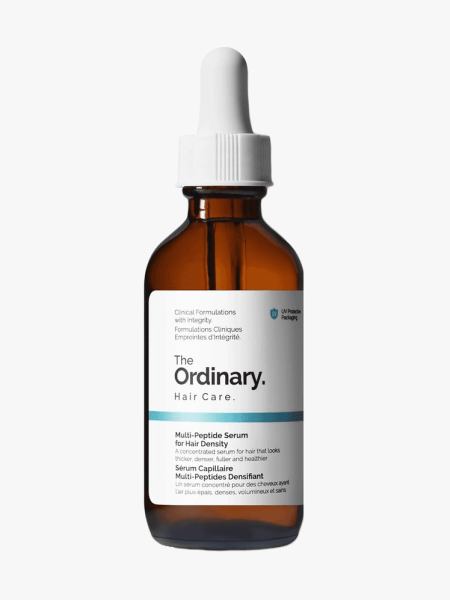
    The Ordinary Multi-Peptide Serum for Hair Density in branded dropper component on a light gray backgroundSave to wishlistSave to wishlist

    The Ordinary

    Multi-Peptide Serum for Hair Density

    $24

    Amazon

    $24

    Nordstrom

    $24

    Ulta Beauty

    Why it’s worth it: The lightweight leave-in (the brand’s first foray into hair care) combines an impressive list of five trademarked ingredient complexes—Redensyl, Procapil, Capixyl, Baicapil, and AnaGain—with caffeine to support thicker- and denser-looking hair. That roster also includes peptides, which are short chains of amino acids that act as signaling molecules, essentially “communicating” with hair follicles and scalp cells, Whitney Hovenic, MD, a board-certified dermatologist based in Reno, Nevada, previously told Allure.

    Together, these technologies may “support the appearance of fuller hair from several biological pathways,” Dara Spearman, MD, a board-certified dermatologist based in Fort Wayne, Indiana, previously told Allure. The key word, however, is support: This cosmetic density serum isn’t an FDA-approved hair-loss treatment like minoxidil, and research on its individual complexes remains limited. Consistent nightly use may help reduce shedding and make early thinning less noticeable, but it’s neither a miracle growth potion nor a substitute for clinically proven treatment, especially for advanced hair loss or shedding tied to an underlying medical condition.

    More to know

    AccordionItemContainerButtonLargeChevron

    • Key ingredients: Redensyl, Procapil, Capixyl, Baicapil, AnaGain, caffeine, biotinoyl tripeptide-1, acetyl tetrapeptide-3
    • Who it's for: people with thinning hair
    • Fragrance-free: yes

    Milky Way: Saccharomyces Ferment 30% Milky Toner
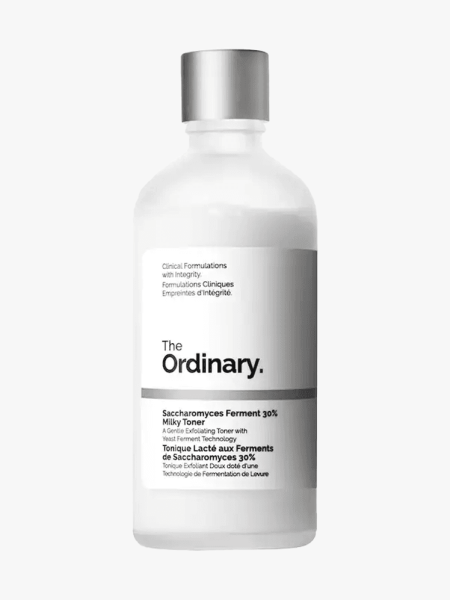
    The Ordinary Saccharomyces Ferment 30% Milky Toner in branded bottle component on a light gray backgroundSave to wishlistSave to wishlist

    The Ordinary

    Saccharomyces Ferment 30% Milky Toner

    $14

    Amazon

    $14

    Nordstrom

    $14

    Ulta Beauty

    Why we love it: If the brand’s Glycolic Acid 7% Exfoliating Toner sounds too intense for your sensitive skin, The Ordinary’s Saccharomyces Ferment 30% Milky Toner is its gentler counterpart. Its 30% Saccharomyces yeast ferment contains 3% N-acetylglucosamine, an amino sugar that gently encourages surface exfoliation without relying on AHAs or BHAs, helping skin look smoother and more even with less potential for irritation. The addition of squalane replenishes moisture and supports the skin barrier, while “the milky texture leaves behind a subtle dewy glow that instantly makes dull skin look fresher and more luminous,” Alessandra Haskin, MD, a board-certified dermatologist based in New York City, previously told Allure. She calls it a “balanced, clarifying toner that delivers the benefits of exfoliation and hydration” in one go. And our editors agreed: Just a few months after launching, it earned an Allure Best of Beauty Award in the Steals category.

    Tester feedback from Han

    AccordionItemContainerButtonLargeChevron

    “I love, love hydrating toners, but when I'm dealing with texture and post-breakout dark spots, I reach for something with a little exfoliating oomph. The Saccharomyces Ferment 30% Milky Toner is so gentle, you'd barely even know it has exfoliating properties. But thanks to fermented yeast, it sweeps away dead skin cells like a dream.” —Sarah Han, commerce editor

    More to know

    AccordionItemContainerButtonLargeChevron

    • Key ingredients: 30% Saccharomyces yeast ferment, squalane
    • Who it’s for: people with dry or sensitive skin
    • Fragrance-free: yes

    One Step Closer to Smooth: Retinal 0.2 Emulsion
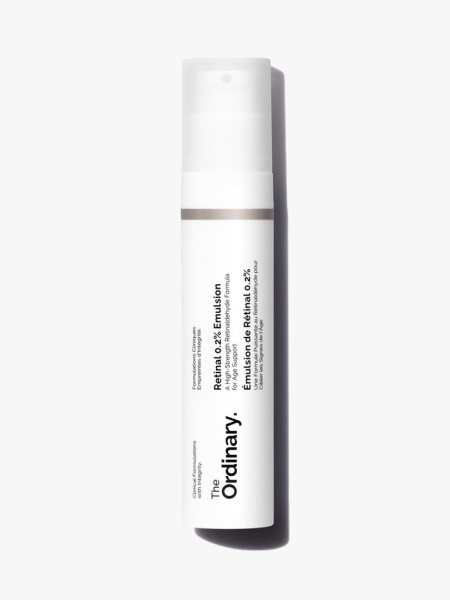
    Retinal 0.2% Emulsion in white tube on gray backgroundSave to wishlistSave to wishlist

    The Ordinary

    Retinal 0.2% Emulsion

    $15

    Amazon

    $15

    Nordstrom

    $15

    Ulta Beauty

    Why it's worth it: If you’ve already worked your way through beginner retinols, The Ordinary’s Retinal 0.2% Emulsion is ready to raise the stakes. It’s the brand’s highest-strength retinoid formula, with 0.2% retinal, which is retinol’s faster-acting relative. Quick chemistry lesson: Retinol has to undergo two conversions in the skin before it becomes active retinoic acid, whereas retinal is already one step closer, allowing it to get to work more efficiently on fine lines, dark spots, uneven tone, rough texture, and loss of firmness.

    Because retinal is notoriously fussy and prone to breaking down, the brand encases it in tiny hydroxyapatite (a calcium-phosphate mineral that makes up much of our bones and tooth enamel) particles for stability, then protects the bright-yellow formula from light and air in an opaque, airless pump as opposed to their usual droppers. The lightweight emulsion also contains lab-made versions of soothing compounds found in oats, plus bisabolol, antioxidant ergothioneine, and vitamin E to offset the dryness and discomfort that can come with retinoid use.

    Tester feedback from former associate manager of special projects Talia Gutierrez

    AccordionItemContainerButtonLargeChevron

    "A humble brag, but my skin has never looked better, and I can credit it to a handful of The Ordinary products I have in my current skincare lineup. My most recent addition is this $15 retinol that I've worked up to using. It's high-strength, meaning if you're new to retinol, this may not be the product to use right off the bat, but if you're looking for an affordable option that doesn't dry out your skin but still delivers the fine-line and dark spot-reducing benefits, give this Retinal 0.2% Emulsion Serum a try." —Talia Gutierrez, former associate manager of special projects

    More to know

    AccordionItemContainerButtonLargeChevron

    • Key ingredients: 0.2% retinal, oat, bisabolol, antioxidant ergothioneine, vitamin E
    • Who it’s for: advanced retinoid users
    • Fragrance-free: yes

    Face the Clean: Squalane Cleanser
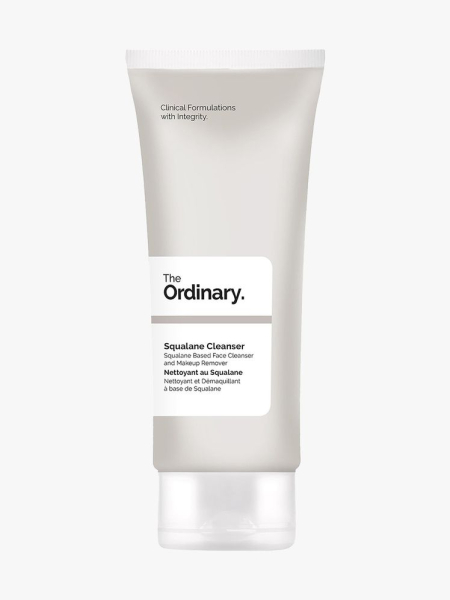
    The Ordinary Squalane Cleanser light gray and white tube on light gray backgroundSave to wishlistSave to wishlist

    The Ordinary

    Squalane Cleanser

    $21

    Amazon

    $21

    Nordstrom

    $21

    Ulta Beauty

    Why it's worth it: When The Ordinary debuted its first face wash, the Squalane Cleanser, the online response was as succinct as it was enthusiastic: “Want!” “Need!” Clearly, shoppers meant it. The bestselling cream-like balm melts into a clear, oil-like cleanser when warmed between dry palms, dissolving makeup, sunscreen, and grime before emulsifying with water and rinsing clean. Plant-derived squalane gives the formula its makeup-melting slip; glycerin draws in moisture, and sugar-derived emulsifiers wash everything away without a greasy film. It became so popular that the brand then released a five-ounce tube—three times the original size—followed by an even more generous 8.1-ounce option, because skin simply can’t get enough of it.

    More to know

    AccordionItemContainerButtonLargeChevron

    • Key ingredients: squalane, glycerin, sugar-derived emulsifiers
    • Who it’s for: everyone
    • Fragrance-free: yes

    Firm Believer: Multi-Peptide + Copper Peptides 1% Serum
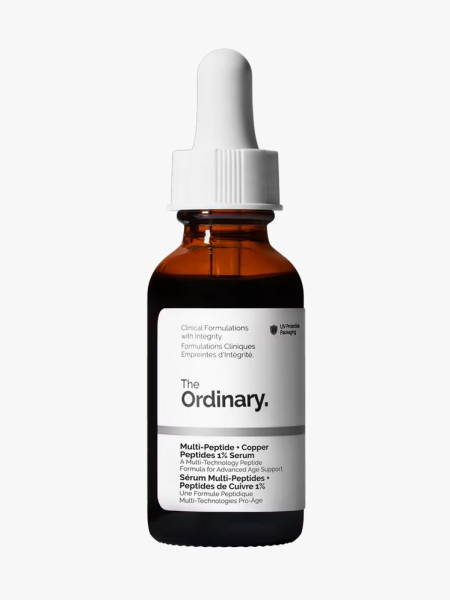
    The Ordinary Multi-Peptide + Copper Peptides 1% Serum in branded dropper component on a light gray backgroundSave to wishlistSave to wishlist

    The Ordinary

    Multi-Peptide + Copper Peptides 1% Serum

    $32

    Amazon

    $32

    Nordstrom

    $32

    Ulta Beauty

    Why it’s worth it: Previously called “Buffet,” The Ordinary’s bright-blue serum may have a more straightforward name now, but it’s still serving nearly everything mature skin could order. Multi-Peptide + Copper Peptides 1% combines several signaling peptides designed to address fine lines, firmness, elasticity, and texture from multiple angles. It “offers broad peptide benefits, including copper tripeptide-1 to maintain collagen and elastin—two structural proteins mature skin gradually loses,” says Mona Foad, MD, a board-certified dermatologist based in Cincinnati. That copper complex is also responsible for the formula’s distinctive blue hue, while glycerin and two forms of hyaluronic acid draw in moisture for an immediate plumping effect. A blend of amino acids, sugars, urea, and PCA (pyrrolidone carboxylic acid) mimics components of skin’s natural moisturizing factors, while allantoin soothes and keeps the ingredient-packed formula comfortable.

    More to know

    AccordionItemContainerButtonLargeChevron

    • Key ingredients: acetyl hexapeptide-8, palmitoyl tripeptide-1, palmitoyl tetrapeptide-7, amino acids, sugars, urea, PCA, allantoin
    • Who it’s for: everyone, especially people with mature skin
    • Fragrance-free: yes

    Spot the Difference: Azelaic Acid Suspension 10%
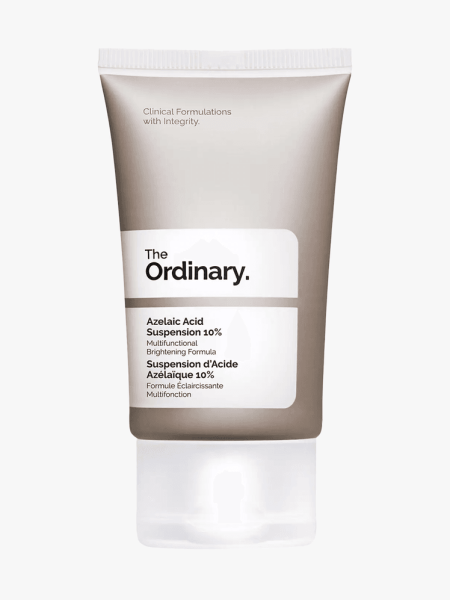
    The Ordinary Azelaic Acid Suspension 10% in tube with clear cap on light gray backgroundSave to wishlistSave to wishlist

    The Ordinary

    Azelaic Acid Suspension 10%

    $12

    Amazon

    $12

    Ulta Beauty

    $12

    Sephora

    Why it's worth it: Dermatologists had long been prescribing 15% to 20% azelaic-acid treatments for acne, but The Ordinary’s Azelaic Acid Suspension 10% helped move the ingredient from the derm office into mainstream skin-care routines. “Azelaic acid has been shown to be bactericidal against P. acnes, the bacteria on the skin that is one of the causes of acne,” Ava Shamban, MD, a Beverly Hills-based board-certified dermatologist, previously told Allure. The multitasking acid also gently loosens dead surface cells, prevents clogged pores and acne-related inflammation, and gradually fades post-blemish discoloration, making this streamlined formula a solid pick for redness, breakouts, uneven tone, and rough texture.

    The “suspension” in its name refers to how the insoluble azelaic acid particles are dispersed throughout a silicone-rich cream, giving it a silky, matte, almost primer-like finish that’s especially well suited to oily skin. (Though that texture can be polarizing: Apply too much or pair it with incompatible formulas and it may pill, turn chalky, or leave a white cast, so a pea-size amount is plenty.)

    Another perk: Azelaic acid is one of the few acne-fighting actives generally considered compatible with pregnancy and nursing. However, it’s always best to clear new ingredients with your ob-gyn or dermatologist.

    More to know

    AccordionItemContainerButtonLargeChevron

    • Key ingredients: 10% azelaic acid, silicones
    • Who it’s for: people with acne-prone skin
    • Fragrance-free: yes

    Frequently Asked Questions

    Meet the experts

    • Mona Foad, MD, a board-certified dermatologist and founder of MONA Dermatology based in Cincinnati, OH
    • Alessandra Haskin, MD, a board-certified dermatologist based in New York City
    • Whitney Hovenic, MD, a board-certified dermatologist based in Reno, Nevada
    • Dara Spearman, MD, a board-certified dermatologist based in Fort Wayne, Indiana
    • Maya Thosani, MD, a board-certified dermatologist based in Scottsdale, Arizona

    How we test and review products

    When Allure tests a product, our editors look at it from every angle in an effort to best serve you. We review ingredients, scrutinize brand claims, and, when necessary, examine peer-reviewed scientific and medical studies. In addition to testing each and every product that's included in each and every review, we rely on experts who shape their fields, including dermatology, cosmetic chemistry, and medicine, to help us vet the ingredients and formulas.

    For our list of the best The Ordinary products, we considered each product's performance across five primary categories: product ingredients and efficacy, packaging, fragrance, texture, and product wear. Every product was determined to have excelled in each category by our editorial team, which is composed of in-house writers and editors as well as contributors—along with special consideration from dermatologists. To learn more information on our reporting and testing processes, read our complete reviews process and methodology page.

    Our staff and testers

    A beauty product is a personal purchase. You might be searching for a face cream to address persistent dryness or a new nail product to add to your Sunday self-care routine; you may simply be browsing around for the latest launches to hit the hair market. No matter what you seek or your individual needs and concerns, Allure wants to ensure that you love anything we recommend in our stories. We believe that having a diverse team of writers and editors—in addition to the wide range of outside testers and industry experts we regularly call upon—is essential to reaching that goal.

    After all, can we really say a skin-care product is the "best" for people over 50 if the only testers we've solicited opinions from folks who have yet to hit 30? Can we honestly deem a high-end diffuser worthy of your hard-earned cash if it's never been tested on curls? We're proud that our staff spans a wide range of ages, skin tones, hair textures, genders, and backgrounds, which means that we are able to fairly assess any beauty product that comes into the beauty closet.